
Macintosh 128K (1984)
Macintosh 128K was released on January 24, 1984. It uses a Motorola 68000, specified by Apple at 8 MHz, and 128 KB of installed RAM. Its 9-inch monochrome display shows 512 × 342 pixels.
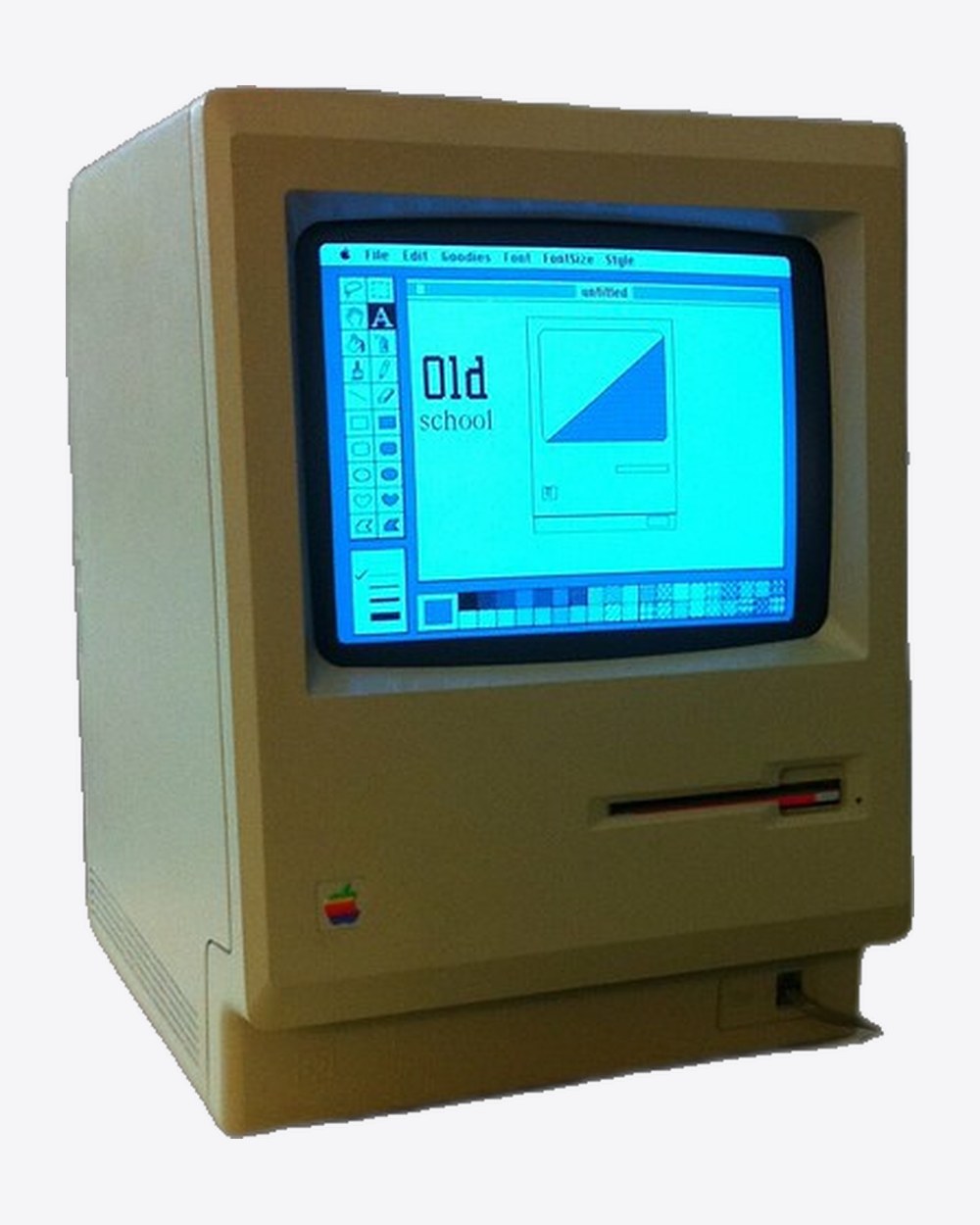
Specs
| Reference | M0001 |
|---|---|
| Release | 1984-01-24 |
| Chip | Motorola 68000 · 8 MHz |
| RAM | 128 KB |
| Storage | 3.5″ · 400 KB |
| Display | 9″ mono · 512×342 |
| Weight | 7.5 kg |
| Dimensions | 34.4 × 24.3 × 27.6 cm |
| Ports | 2× serial · mouse · floppy · audio |
| OS | System 1.0 |
| Price | 2,495 USD |
Launch
Introduced by Steve Jobs on 24 Jan 1984, pulled from a bag on stage.
Why it existed
Apple's 1984 brochure described a concrete goal: make a computer require less learning of commands. Macintosh brought together a screen, floppy drive and mouse-controlled windows and icons. This was the purpose Apple explained to customers, not a reconstruction of its internal decisions.
What it introduced
It did not invent the graphical interface: the Computer History Museum places it after Lisa and ideas from Xerox Alto. Its contribution was to package that experience in a small, self-contained $2,495 computer. MacPaint and MacWrite made the mouse, text and graphics visible tasks rather than just specifications.
Computer History Museum · Apple Macintosh · Apple · Macintosh brochure (1984)
The connection with Xerox PARC and Lisa cannot be reduced to an instant copy: Macintosh was already a project before the 1979 demonstrations. The Apple Lisa entry develops that context and distinguishes the later Xerox v. Apple case from Apple's litigation against Microsoft and Hewlett-Packard. Apple Lisa history
Stanford, Making the Macintosh: The Xerox PARC Visit · Apple Computer, Inc. v. Microsoft Corp., 35 F.3d 1435 (19 September 1994)
Against the competition
Against the IBM/DOS environment, the difference was the way of working: selecting and dragging objects on screen rather than relying on typed names and commands. This does not establish superiority in every task. The Smithsonian notes that IBM/DOS sold better in business markets while Apple particularly appealed to artists and designers.
Documented impact
The Computer History Museum records early adoption by graphic designers, artists and educators. There was also a major constraint: many users found 128KB insufficient. This first model's influence should be separated from the later development of desktop publishing, which involved other computers, software and printers.
Computer History Museum · Apple Macintosh · Smithsonian · Apple Macintosh Microcomputer
Configurations and limits
The original had a 68000 at about 8MHz, 128KB RAM and a 400KB floppy drive; its 9-inch screen displayed 512 × 342 monochrome pixels. There were no RAM expansion slots. A unit with 512KB may be modified or a different model; that is not an original 128K configuration.
Interest for collectors
Its historical interest is supported by its preservation at the Computer History Museum and Smithsonian. In a collection it illustrates the first Macintosh experience and its physical limits. An original 128K must be distinguished from an upgraded unit; this documentary difference is not itself a valuation or evidence of market rarity.
Computer History Museum · Apple Macintosh · Smithsonian · Apple Macintosh Microcomputer
Relationship to later products
Macintosh 512K arrived in September 1984 with four times the memory. It kept the compact format and graphical experience while easing an original limitation. It is not a RAM option to merge into this entry but a later product with its own identity.
The signatures, recalled by a team member
In "Signing Party", Andy Hertzfeld recalls a signing gathering on February 10, 1982, intended to transfer the team's signatures to the case mold. He adds that some were partly obscured even before the first shipments, and later case revisions removed more names.
Marketing
The «1984» ad directed by Ridley Scott aired during Super Bowl XVIII (22 Jan 1984).
Flaws and fixes
Too little RAM and no hard drive; the 512 KB «Fat Mac» followed in Sept 1984.
More from the same family
Updated: October 24, 2026 · Compare this product