
MacBook Air (2020)
13-inch, M1
Apple announced the M1 Air on November 10, 2020, with orders that day and arrival announced for the following week. US starting price: 999 USD.
Specifications
| Announcement | 2020-11-10 |
|---|---|
| Chip | Apple M1 |
| CPU / GPU | CPU 8 · GPU 7 / 8 |
| Memory | 8 / 16 GB |
| SSD and options | 256 / 512 GB / 1 / 2 TB |
| Neural Engine | Neural Engine 16 |
| Display | 13.3 in · 2560 × 1600 px · 400 nits |
| Ports | 2 Thunderbolt / USB 4 · 3.5 mm |
| Wireless | Wi-Fi 6 |
| Battery | 49.9 Wh |
| Weight | 1.29 kg |
| US launch price | 999 USD |
History and documentation
Apple announced the M1 Air on November 10, 2020, with orders that day and arrival announced for the following week. US starting price: 999 USD.
The M1 Air belongs to the start of another architecture transition. On June 22, 2020, Apple announced the Mac's move to chips designed by the company itself. Tim Cook presented the decision; Apple planned its first Mac of this era before the year ended and expected the change to take about two years. On November 10, it announced the M1 MacBook Air, 13-inch MacBook Pro, and Mac mini together. These are separate milestones: June's strategy and November's products. The approximate two-year schedule was a forecast, not a completion date established by those announcements. Designing a chip also does not mean Apple physically manufactured it in its own factories.
Apple, Apple silicon transition announcement, 22 June 2020 · Apple, first three M1 Macs announcement, 10 November 2020
Design and specifications
Apple M1 chip with an 8-core CPU, four performance and four efficiency cores; 7 / 8-core GPU and 16-core Neural Engine. Unified memory: 8 / 16 GB; 256 GB SSD with 512 GB, 1 TB or 2 TB options. Fanless design.
Use and context
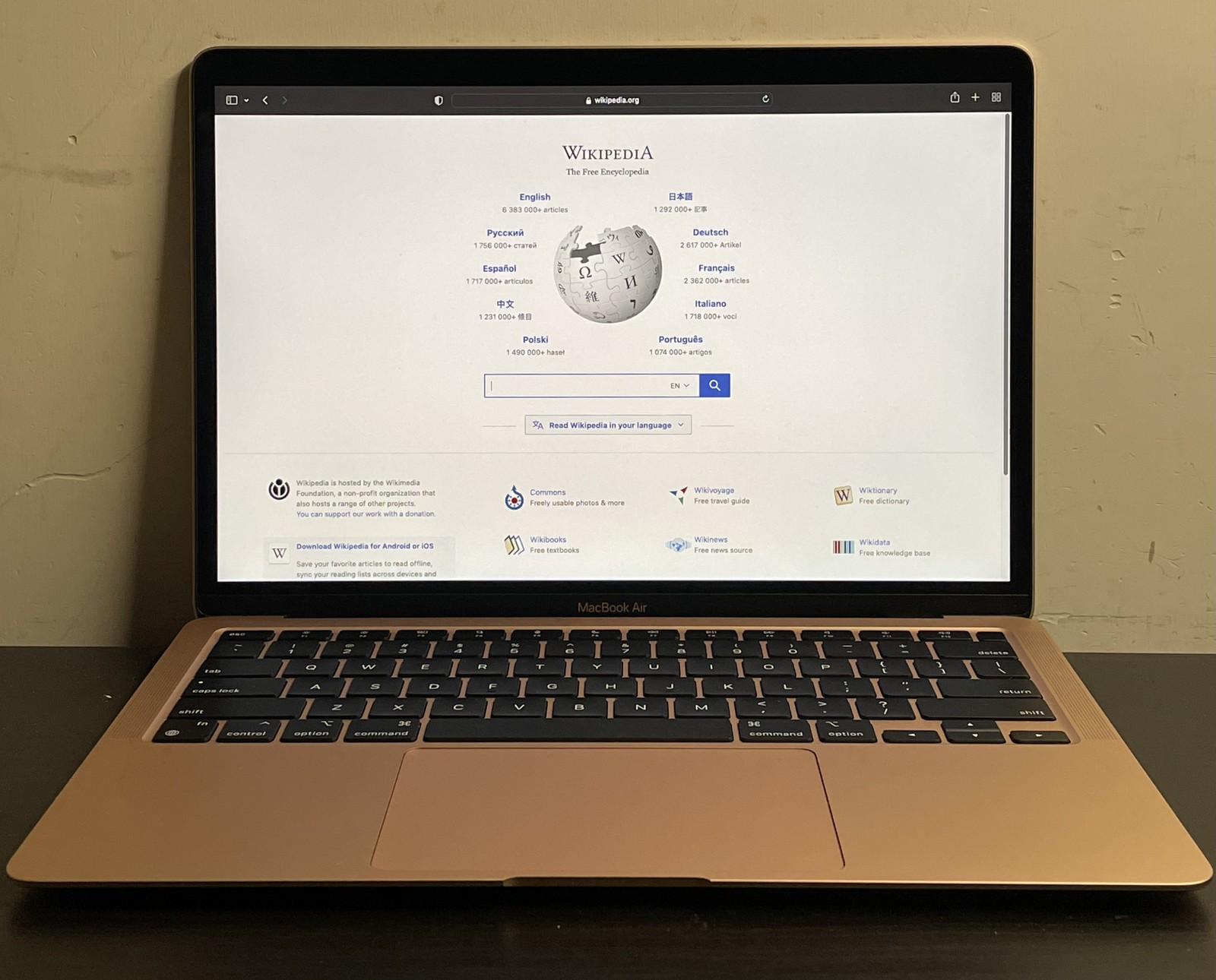
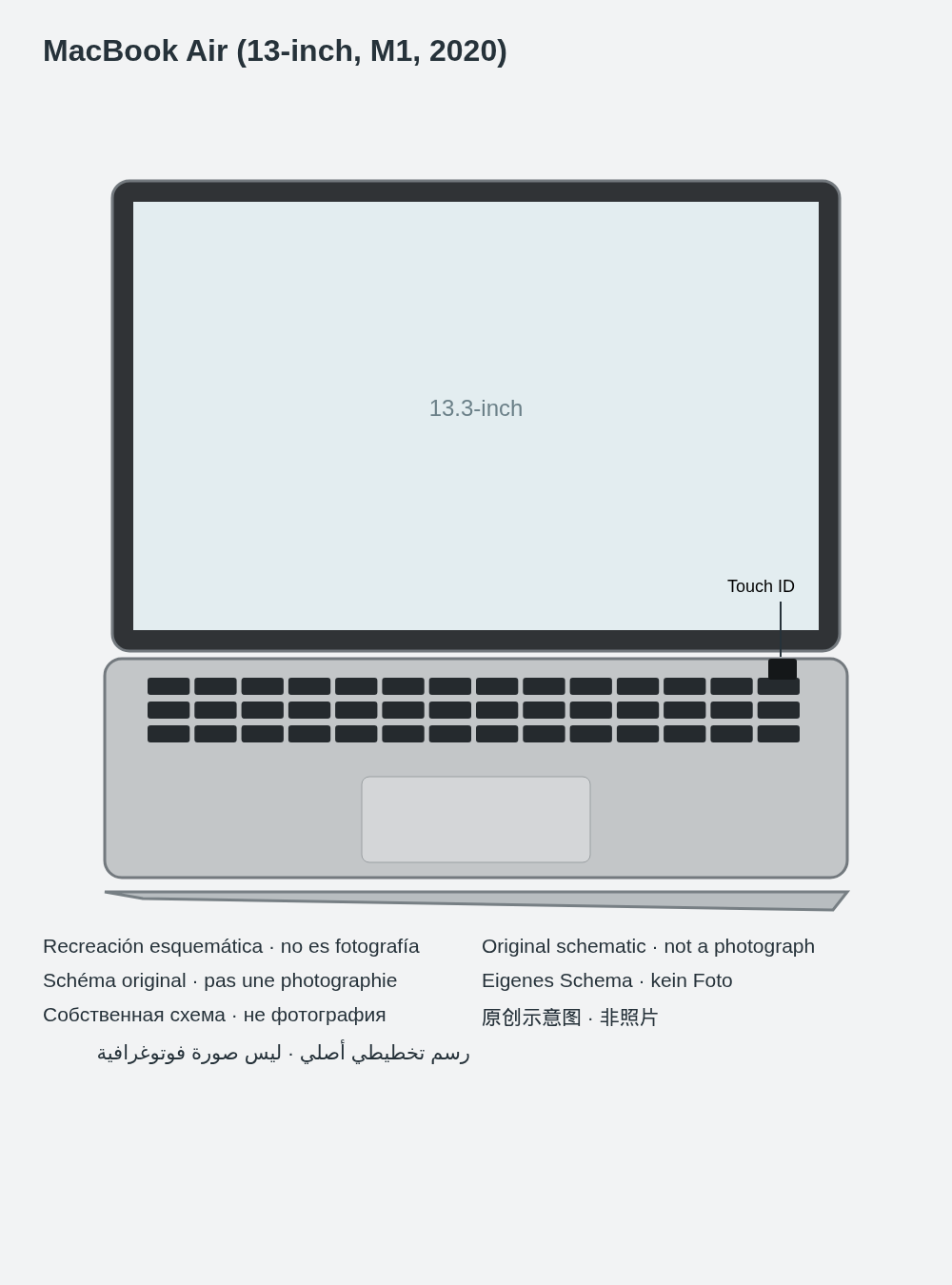
13.3-inch Retina display: 2560 × 1600 px, 400 nits, P3 and True Tone. Backlit Magic Keyboard, Touch ID and Force Touch trackpad; 720p FaceTime HD camera. Wi-Fi 6 and one external display up to 6K at 60 Hz. Ports: 2 Thunderbolt / USB 4 · 3.5 mm.
Launch battery figures did not describe a universal working day. Writing in The Verge on November 17, 2020, Dieter Bohn reported eight to ten hours of sustained work, depending on workload, on his 16 GB, 1 TB review unit. He distinguished this from Apple's published video and browsing tests. His observation documents that combination of computer and use; it does not promise the same duration for every configuration or an aged battery.
Reception was not unqualified praise either. Bohn praised the computer's responsiveness but remained critical of its 720p camera: he appreciated more even lighting on his face, yet still considered the image poor. The camera already appears in the specifications; the testimony adds the judgment of someone who used it. The processor transition could be convincing without renewing every laptop component equally.
Notes and image
49.9 Wh battery; 1.29 kg weight. Apple advertises up to 15 h of wireless web and 18 h of video, depending on tests, use and configuration. The contemporary release specifies macOS Big Sur, not Sequoia later added to Support. Labelled original schematic, not a photograph or scale drawing.
Sources
- Apple: original press release
- Apple: original technical specifications
- Dieter Bohn / The Verge, 2020-11-17
- dimensioncupertino.com · Original schematic illustration
Updated: October 30, 2026 · Compare this product