
Apple IIe (1983)
Apple IIe (1983): II Plus successor with 64 KB, lowercase support, seven slots plus auxiliary. Base 40-column text; 80 with an optional card.
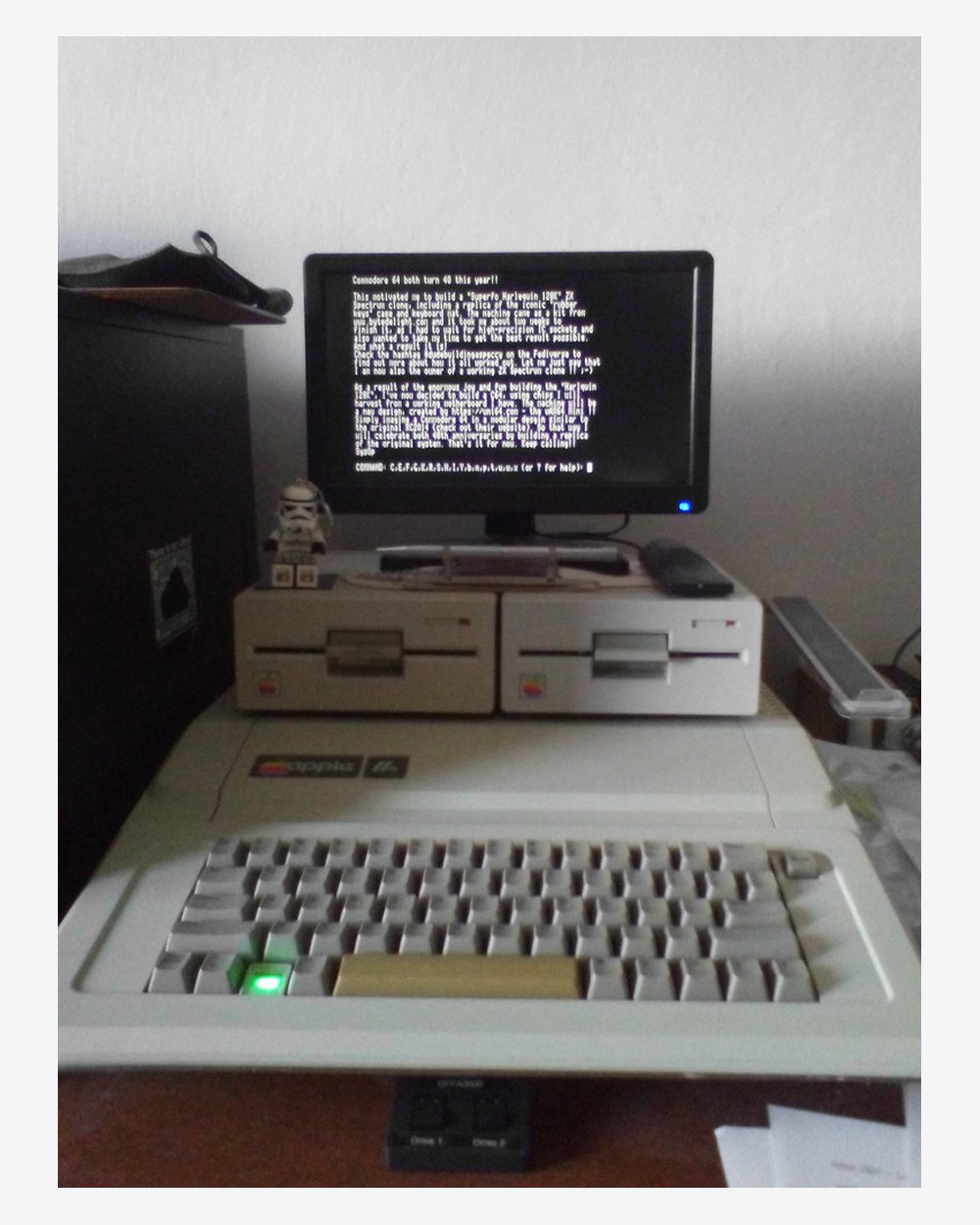
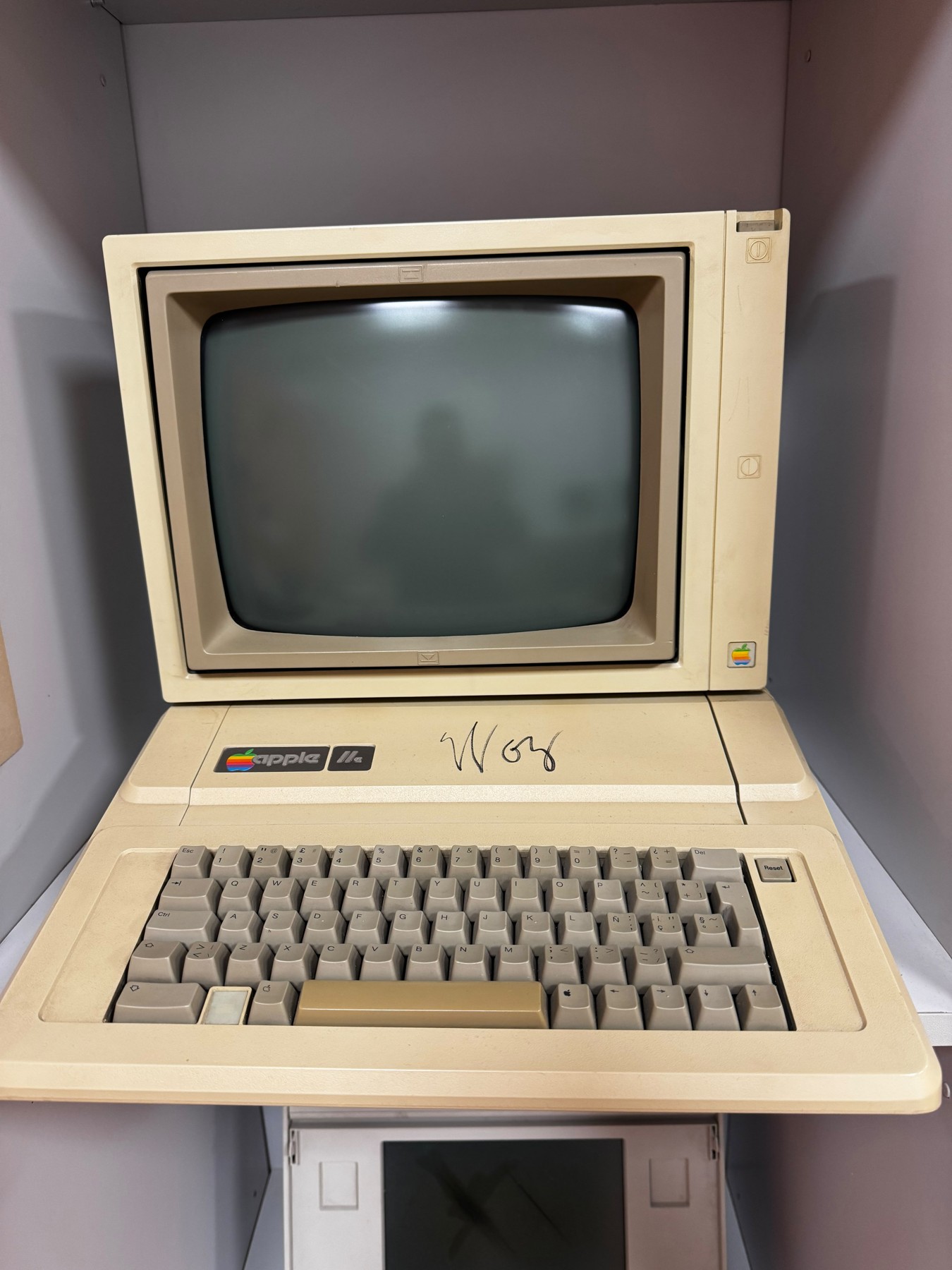
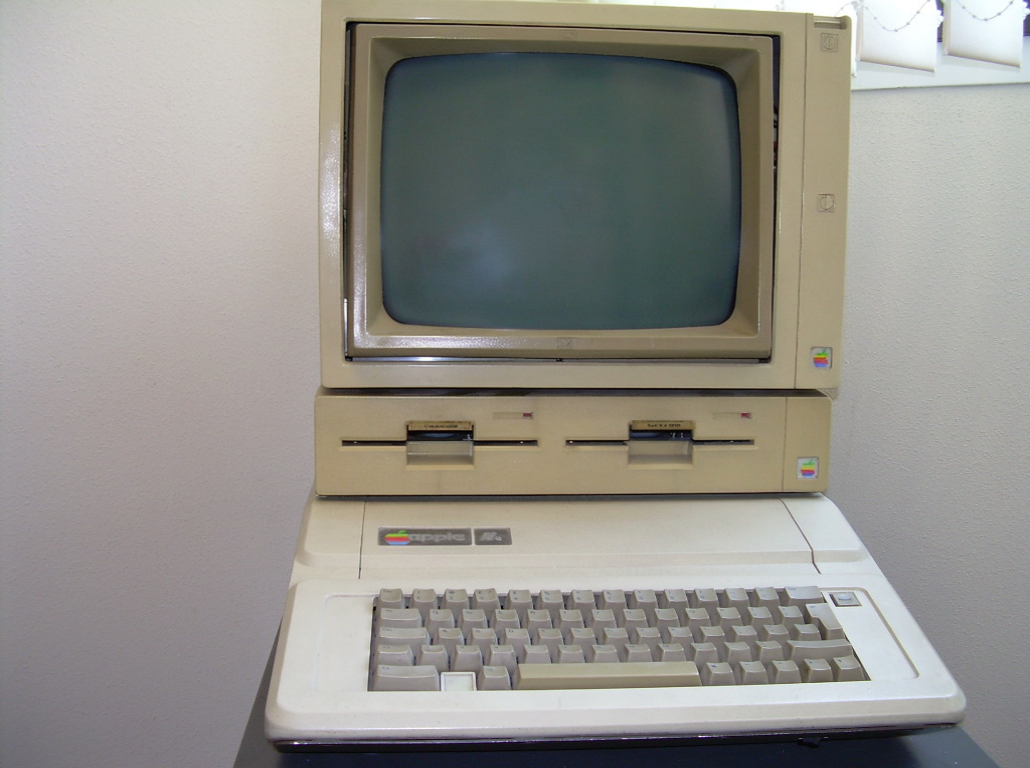
Specs
| Reference | Apple IIe |
|---|---|
| Launch / discontinued | 1983-01 / 1993-11 |
| CPU | 6502 @ 1.02 MHz (65C02 in 1985) |
| Memory | 64 KB (expandable to 128 KB+) |
| Storage | Optional Disk II / UniDisk |
| Display / graphics | 40-column text; 80 with optional card; upper/lowercase |
| Expansion / ports | 7 slots + auxiliary slot |
| US launch price | USD 1,395 |
Launch
The Apple IIe arrived in January 1983 as the II Plus successor, initially priced at US $1,395 for the main unit according to the history consulted. The e meant enhanced, but the original model is not the 1985 Enhanced IIe. The initial IIe retained a roughly 1.02 MHz 6502; the 1985 revision introduced the 65C02. Monitor, storage and cards must be distinguished from what a particular package included.
Marketing
Apple's brochure and manual document 64 KB RAM, an upper/lowercase keyboard, repeating keys and an auxiliary slot beside seven general expansion slots. The basic display was 40 columns; 80 columns required an optional card. The Extended 80-Column Text Card added another 64 KB for 128 KB total and is different from the simpler 80-column text card. Memory-management and input/output chips integrated functions previously spread across many components.
Apple · The Apple IIe Personal Computer System · 1982 · Apple · Apple IIe Owner's Manual · 1982/1983
Flaws and fixes
The design aimed to preserve Apple II software and peripheral use without promising absolute compatibility with every program or card. Keyboard, ROM and memory changes could require adjustments. The actual configuration matters more than attributing later revisions and upgrades to every IIe. The family lasted until November 1993 and was widely used in education, but its 8-bit base neither made it a Macintosh nor proves that no mouse or graphical software could ever be used.
Apple · Apple IIe Owner's Manual · 1982/1983 · Wikipedia · Apple IIe
Connectors and expansion in the original manual
The manual separates built-in connections from those added by cards. The rear has video output, cassette input and output, and a nine-pin hand-control connector. Inside is a separate sixteen-pin GAME I/O connector. The auxiliary slot has sixty contacts for an 80-column text card or other cards designed specifically for it; it is not an eighth general-purpose slot identical to the seven numbered slots.
Numbered rear openings mount card connectors: 1–4 for nineteen pins; 5, 6, 8 and 9 for nine; 7, 10, 11 and 12 for twenty-five. These are mounting cutouts, not twelve electronic interfaces supplied as standard. The Disk II installation example places the first controller in slot 6 and a second in slot 4 for three or four drives; it does not establish that such drives were included.
A video monitor receives the signal directly over a cable. A television needs a separately purchased RF modulator and its tuning instructions. Apple recommends a black-and-white monitor for more legible 80-column text: a modulator neither turns a monochrome television into a color set nor improves legibility by itself. The manual also warns that some II or II Plus cards may not work in the IIe, especially cards attached elsewhere on the main board.
More from the same family
Updated: November 15, 2026 · Sources: Wikipedia, Wikipedia · Compare this product