
iPhone SE (2020)
2nd generation · (A2275)
Apple announced the iPhone SE (2nd generation) family in 2020 with iOS 13 and 64 / 128 / 256 GB capacities. This entry separates code A2275; finishes and capacities are not treated as new revisions without evidence. Announced availability does not prove actual sales of each regional version.
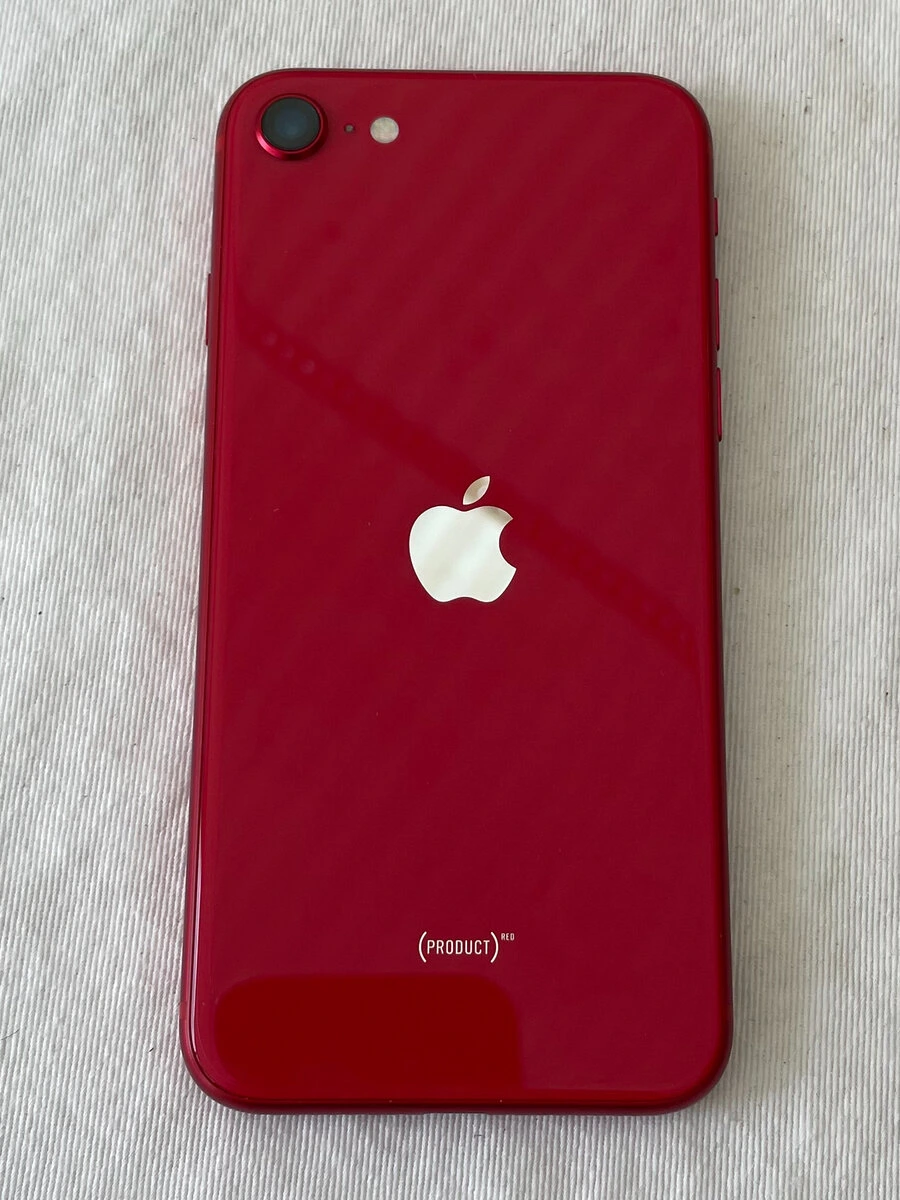
Representative rear view of the family iPhone SE (2020). It does not identify the regional, radio, SIM or storage variant of this entry. Reduced version, with no new retouching. Seth Whales / Wikimedia Commons / CC BY-SA 4.0.
Specifications
| Chip | A13 Bionic |
|---|---|
| Capacity | 64 / 128 / 256 GB |
| Display | 4.7 in · IPS LCD P3 |
| Resolution | 1334 × 750 |
| Density | 326 ppi |
| Rear camera | 12 MP f/1.8 |
| Front camera | 7 MP · f/2.2 |
| Rear video | 4K · 24/30/60 fps |
| Radio | FDD-LTE 1/2/3/4/5/7/8/12/13/14/17/18/19/20/25/26/29/30/66/71; TD-LTE 34/38/39/40/41/42/46/48 |
| Connectors | Lightning · nano-SIM + eSIM |
| Dimensions | 138.4 × 67.3 × 7.3 mm |
| Weight | 148 g |
History and documentation
Apple announced the iPhone SE (2nd generation) family in 2020 with iOS 13 and 64 / 128 / 256 GB capacities. This entry separates code A2275; finishes and capacities are not treated as new revisions without evidence. Announced availability does not prove actual sales of each regional version.
Design and specifications
It uses A13 Bionic and a 4.7-inch IPS LCD P3 screen, 1334 × 750 pixels and 326 ppi, with True Tone and Haptic Touch. It measures 138.4 × 67.3 × 7.3 mm and weighs 148 g. Touch ID is in the Home button; it does not use Face ID. IP67 is a laboratory rating, not permanent resistance.
Use and context
It has one rear 12 MP f/1.8 wide camera with optical stabilization. The front camera has 7 MP and f/2.2. Rear video: 4K at 24/30/60 fps and 1080p at 30/60 fps. Wireless charging uses Qi.
Display, sensors and the 2020 charging test
Apple documents 1400:1 typical contrast, 625 nits typical maximum brightness and a fingerprint-resistant oleophobic coating. Beyond Touch ID, it lists a barometer, three-axis gyro, accelerometer, proximity sensor and ambient light sensor. These are second-generation iPhone SE specifications; this entry retains the A2275 identification.
The rear camera combines a six-element lens, sapphire crystal lens cover and autofocus with Focus Pixels. Photo zoom up to 5x is digital. Panorama up to 63MP does not change the camera’s native 12MP resolution; slow-motion recording supports 1080p at 120 or 240 fps.
Up to 50% charge in 30 minutes requires a separate 18 W or higher adapter. Note 11 describes February 2020 tests with drained preproduction second-generation SE units and Apple USB-C adapters A1720 at 18 W and A1882 at 30 W, not a guarantee for a used battery. IP67 means laboratory testing up to 1 m for 30 minutes; resistance decreases with wear, a wet phone must not be charged and Apple warranty does not cover liquid damage.
Notes and image
The A2275 table lists CDMA, UMTS and GSM. Exact bands appear in the specifications, without promising current service. The documented configuration uses nano-SIM and eSIM, subject to carrier support. It includes 802.11ax Wi-Fi with MIMO, Bluetooth 5.0 and Lightning. Bands do not guarantee current service.
Sources

Updated: October 24, 2026 · Compare this product
Historical catalogue links
Relationships already recorded in the catalogue, not a complete succession chain. Same-year variants are shown as related. A missing link does not prove that an earlier or later model does not exist.