
iPhone 6 (2014)
A1586
Apple announced the iPhone 6 family in 2014; this entry identifies radio model A1586, not every regional version at once. The original announcement offered 16, 64 and 128 GB; it did not include the 32 GB later listed in iPhone 6 documentation. Later catalogue additions are not treated as launch equipment.
Representative photo of the same model and generation. It does not certify this entry's regional variant, A-number, radio, SIM or storage.

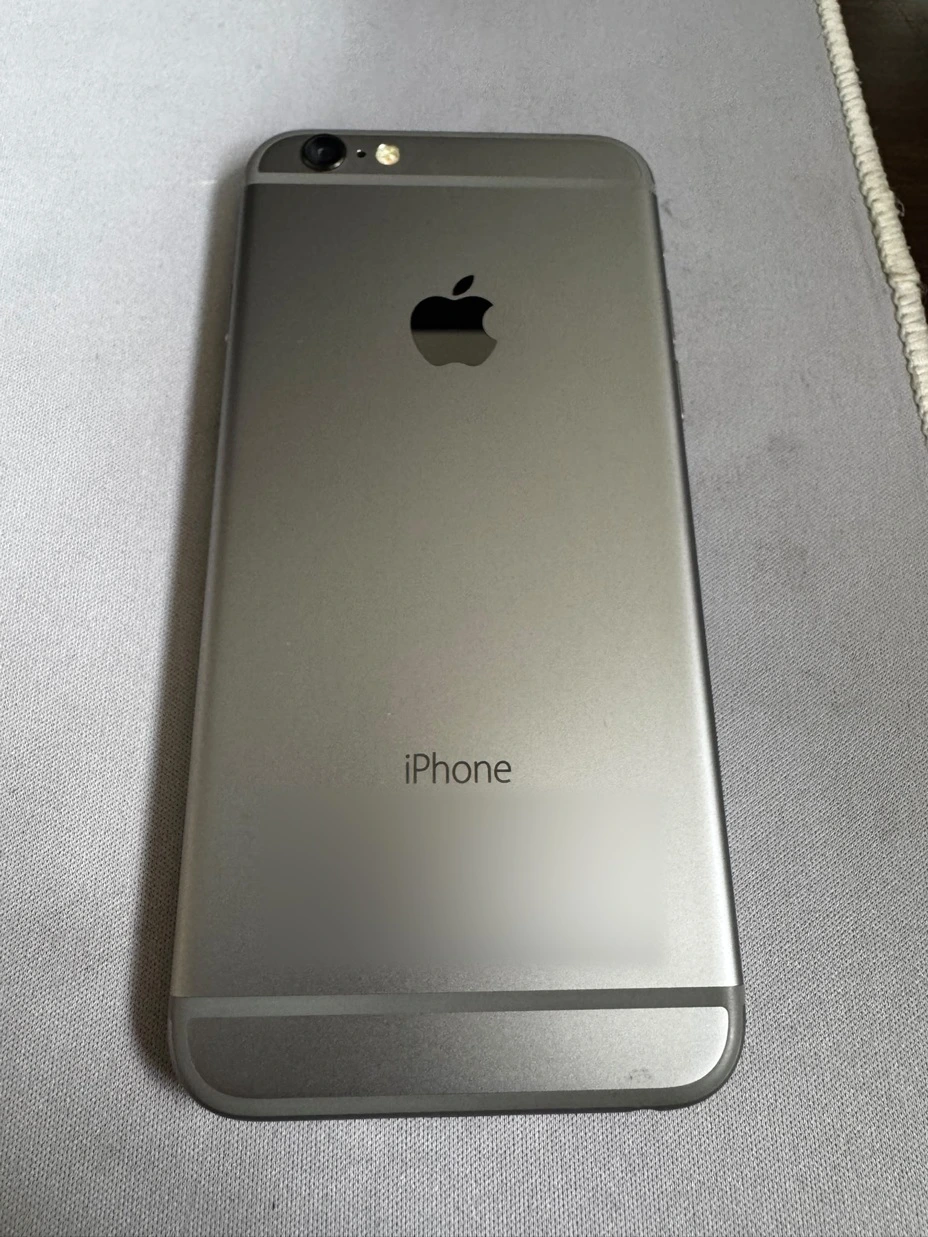
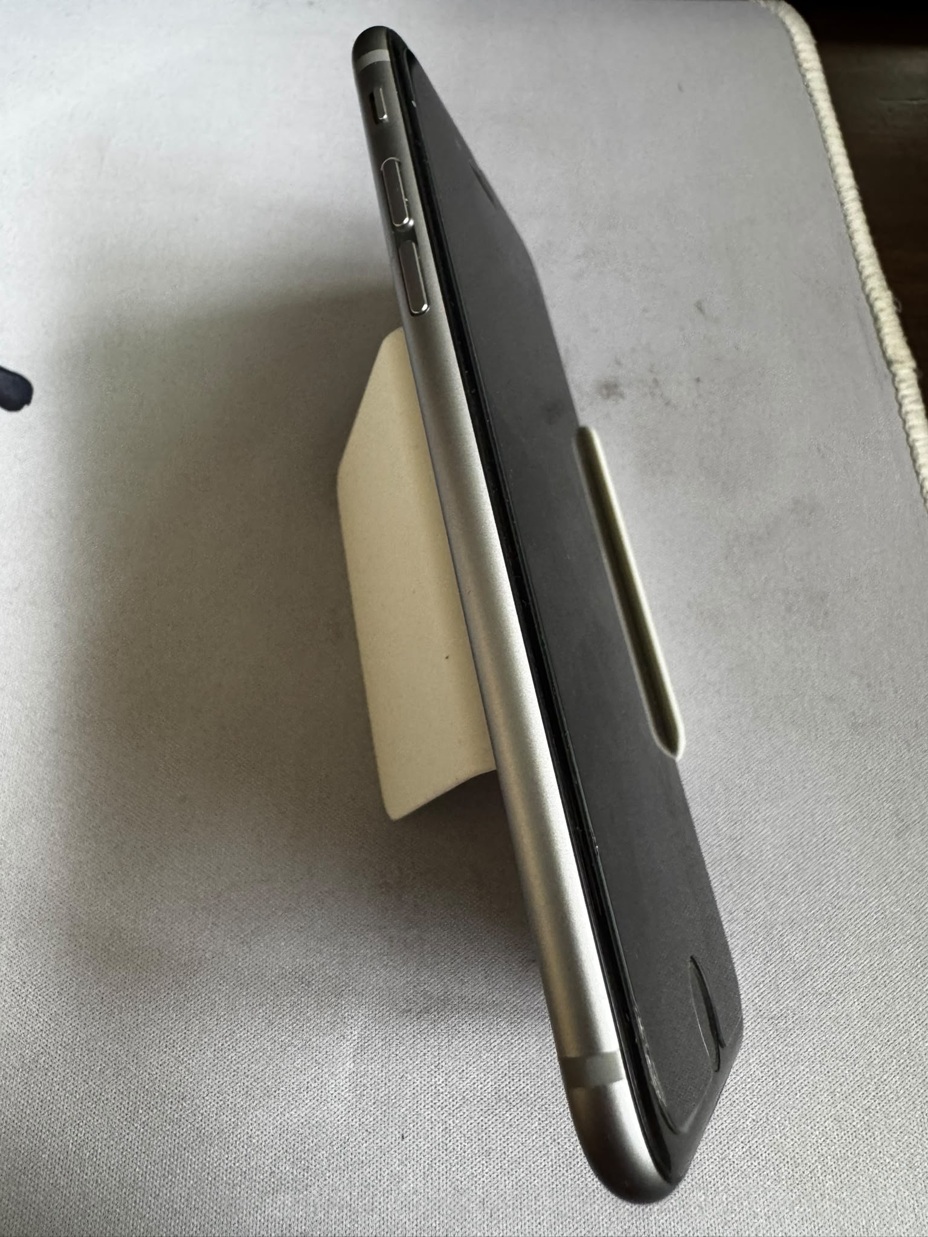
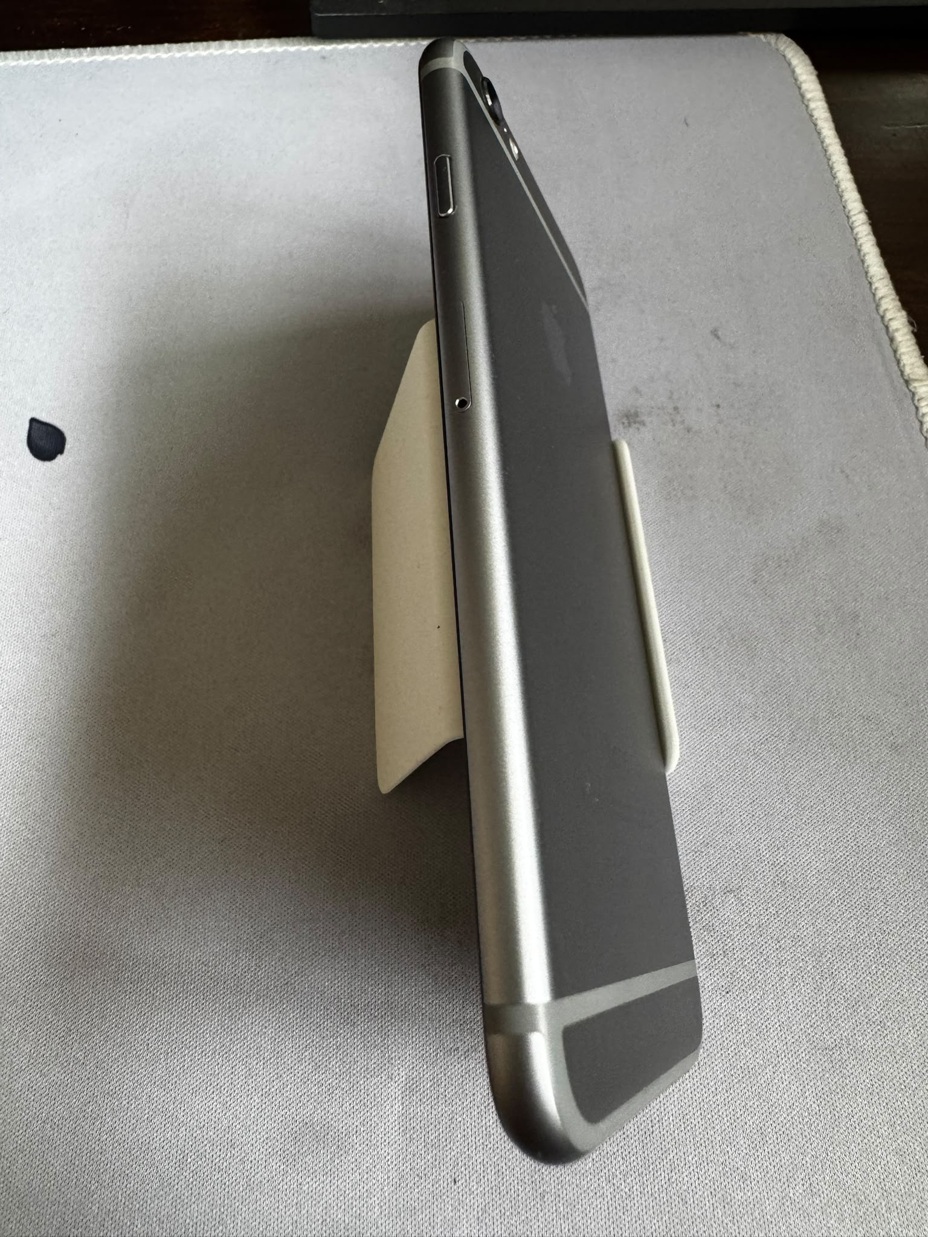
iPhone 6 · A1586. Original photo from the iMuseo collection. Unit identifiers are hidden where present.
Specifications
| Chip | A8 |
|---|---|
| Coprocessor | M8 |
| Display | 4.7 in · IPS LCD |
| Resolution | 1334 × 750 |
| Density | 326 ppi |
| Rear camera | 8 MP · f/2.2 |
| Front camera | 1.2 MP |
| Rear video | 1080p · 30/60 fps |
| Radio | A1586 · FDD/TD-LTE |
| Connectors | Lightning · 3.5 mm |
| Dimensions | 138.1 × 67.0 × 6.9 mm |
| Weight | 129 g |
History and documentation
Apple announced the iPhone 6 family in 2014; this entry identifies radio model A1586, not every regional version at once. The original announcement offered 16, 64 and 128 GB; it did not include the 32 GB later listed in iPhone 6 documentation. Later catalogue additions are not treated as launch equipment.
Why it existed
Apple announced it on 9 September 2014 to expand the standard iPhone to 4.7 inches, alongside the 5.5-inch Plus. Pre-orders were announced for 12 September and availability for 19 September in the first markets. Spain followed on 26 September: that was not one worldwide date for every country.
Apple · iPhone 6 announcement · 9 September 2014 · Apple · first-weekend iPhone sales statement · 22 September 2014
What it introduced
It combined a 1334 × 750 Retina HD display, A8, an M8 motion coprocessor with barometer and a Focus Pixels camera. The larger display and aluminum design changed iPhone use, rather than inventing large phones. Apple Pay was announced for an October update in the US, not as a worldwide service already running in September.
Against the competition
Samsung’s Galaxy S5 already offered a 16 MP camera, fingerprint scanner and IP67 protection. iPhone 6 combined its display, Touch ID and ecosystem differently. These were different technical choices: megapixels and promotional announcements do not establish a universal winner, and the rival’s IP67 must not be assigned to iPhone.
Samsung · Galaxy S5 announcement · 25 February 2014 · Apple · iPhone 6 announcement · 9 September 2014
Documented impact
On 22 September 2014, Apple reported over ten million iPhone 6 and 6 Plus sales after the first weekend. That was a combined manufacturer figure, not standard-model sales alone or a lifetime total. The Verge’s David Pierce praised the screen and camera but criticized the antenna strips and limited use of the larger display area.
Apple · first-weekend iPhone sales statement · 22 September 2014 · David Pierce · iPhone 6 review · The Verge · 17 September 2014
Configurations and limits
Launch configurations were 16, 64 and 128 GB in gold, silver and space gray. The advertised US prices of $199, $299 and $399 required a two-year contract; they were not universal unlocked prices. The 4.7-inch model must not inherit the Plus model’s optical image stabilization or be confused with it.
Interest for collectors
Its documentary interest lies in the larger standard format and Apple Pay’s arrival in this generation. Record capacity, regional model, condition, repairs and documentation when studying an example. A family photograph does not certify an exact variant; the year, color or box alone cannot establish rarity or value.
Apple · iPhone 6 announcement · 9 September 2014 · David Pierce · iPhone 6 review · The Verge · 17 September 2014
Relationship to later products
Apple announced iPhone 6s on 9 September 2015 with A9, 3D Touch, a 12 MP camera and Live Photos. These additions distinguish it from iPhone 6: a similar exterior does not turn the earlier phone into a 6s or physically add its camera and pressure sensing.
Apple · iPhone 6s announcement · 9 September 2015 · Apple · iPhone 6 announcement · 9 September 2014
Design and specifications
It combines the 64-bit Apple A8 and M8 motion coprocessor with a 4.7-inch IPS LCD, 1334 × 750 pixels and 326 ppi. The screen supports Multi-Touch. It measures 138.1 × 67.0 × 6.9 mm and weighs 129 g. Touch ID is built into the Home button.
Use and context
The rear camera has 8 MP, f/2.2 aperture and True Tone flash; the front camera has 1.2 MP. It records 1080p video at 30 or 60 fps. The Plus version's optical stabilization is not attributed to this model. The rear camera uses Focus Pixels for autofocus.
The larger screen also changed how the phone was held. In his September 17, 2014 review for The Verge, David Pierce said he tended to rest it on his fingers rather than grip it in his palm to reach the farthest corners. He still found one-handed use comfortable. This is the reviewer's particular experience, not an ergonomic guarantee for every hand or proof that everyone preferred the new size.
Pierce also noted an everyday consequence of the protruding rear camera: the phone did not lie flat on a table and wobbled in use. He worried about scratching the lens and thought a case helped both with resting it down and gripping the slick surface. Observation and concern should remain distinct: the review described wobbling, but the worry about scratches was not a camera durability test.
David Pierce / The Verge (17 Sep 2014)
Notes and image
This radio adds TD-LTE 38/39/40/41 and TD-SCDMA to FDD-LTE, UMTS, GSM and CDMA; its bands are not automatically assigned to A1549 or A1522. Wi-Fi 802.11ac. The 2014 announcement specified Bluetooth 4.0; the current archive lists 4.2. It has nano-SIM, Lightning and a 3.5 mm headphone jack. Network service depends on the carrier; current service is not promised.
Sources
Updated: October 24, 2026 · Compare this product
Historical catalogue links
Relationships already recorded in the catalogue, not a complete succession chain. Same-year variants are shown as related. A missing link does not prove that an earlier or later model does not exist.