
iPad Pro (2020)
iPad Pro (2020): iPad with the A12Z Bionic and a 11″ / 12.9″ display.
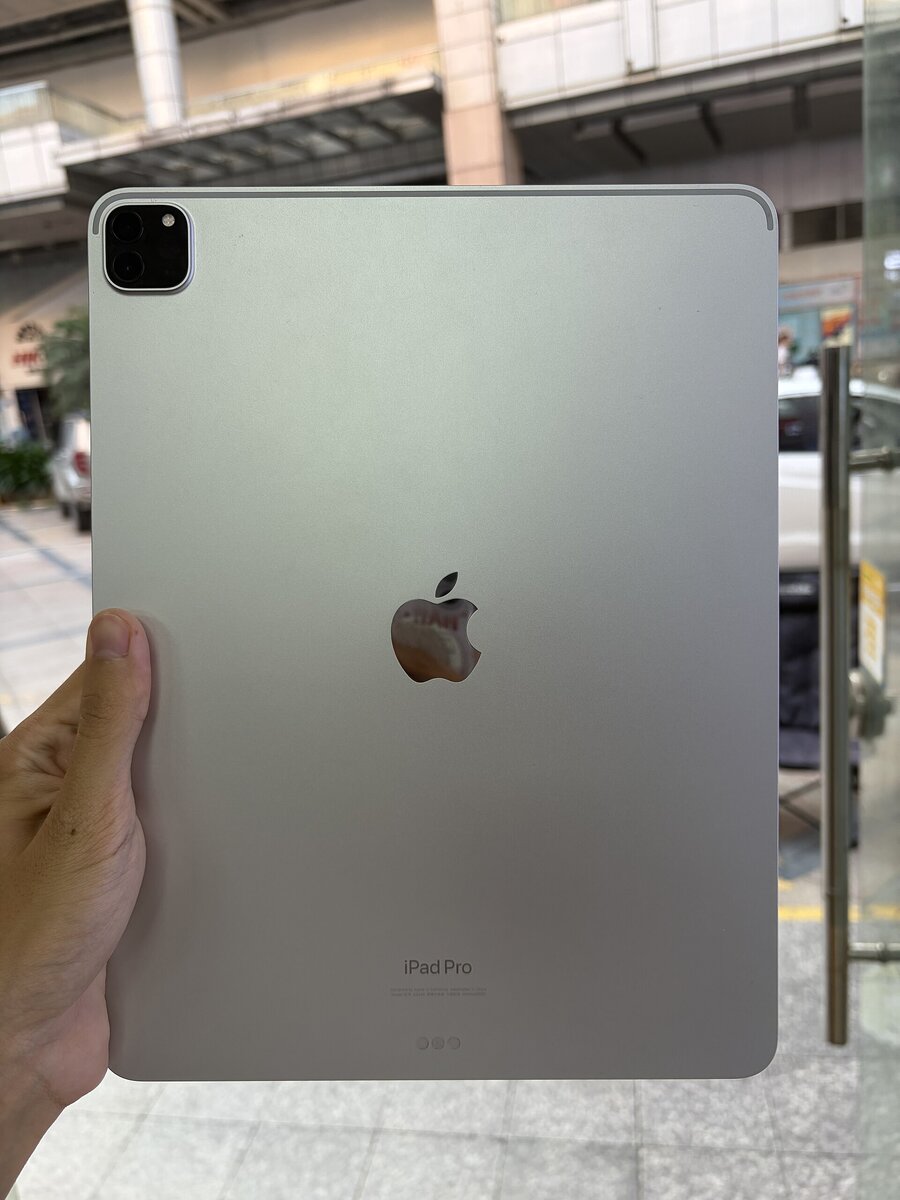
Specs
| Release | 2020-03-25 |
| Chip | A12Z Bionic |
| Storage | 128 GB – 1 TB |
| Display | 11″ / 12.9″ · 2388×1668 / 2732×2048 |
| Ports | USB-C |
| Weight | 471 g / 641 g (Wi-Fi) |
| Dimensions | 247.6 × 178.5 × 5.9 mm / 280.6 × 214.9 × 5.9 mm |
Launch
Introduced: March 18, 2020. On sale: March 25, 2020. Those dates come from Wikipedia's list of iPad models; the specifications come from Apple Support's tech specs page.
Marketing
Apple's original March 18, 2020 announcement emphasized the A12Z Bionic chip, ultrawide camera and LiDAR Scanner, positioning the device for creative work and augmented reality. The manufacturer's performance claims are distinguished below from contemporary independent tests. (Apple Newsroom)
Flaws and fixes
The sources consulted (Apple's spec sheet) record no model-specific defect, and this page does not make any up.
iPad Pro in 2020: A12Z, LiDAR and the two sizes
Launch and identification
Apple introduced this generation on March 18, 2020, and opened orders that day; the announcement placed store availability in the following week. The range combined the second-generation 11-inch iPad Pro and fourth-generation 12.9-inch model, in silver or space gray. Both started at 128GB, with 256GB, 512GB and 1TB options. In the United States, launch prices were US$799 and US$949 for the 11-inch Wi-Fi and cellular versions; the 12.9-inch versions started at US$999 and US$1,149. These are historical launch prices, not current offers.
Apple's identification guide distinguishes the variants without relying only on appearance. For the 11-inch model, A2228 identifies Wi-Fi; A2068 and A2230 identify cellular versions, and A2231 the cellular version for mainland China. For the 12.9-inch model, the identifiers are A2229 for Wi-Fi, A2069 and A2232 for cellular, and A2233 for mainland China. Generation numbers differ between sizes: second and fourth refer to two product lines updated together in 2020.
Size and display
Both sizes were 5.9mm thick, but their dimensions and weights were not interchangeable. The 11-inch model measured 247.6 × 178.5mm and weighed 471g with Wi-Fi or 473g with cellular. The 12.9-inch model measured 280.6 × 214.9mm and weighed 641g or 643g respectively. Apple notes that dimensions and weight can vary with configuration and manufacturing process. These figures describe the iPad itself, not a package including a case, keyboard or stylus.
Both Liquid Retina displays were fully laminated, LED-backlit IPS LCDs with P3 color, True Tone and an antireflective coating. The 11-inch screen offered 2,388 × 1,668 pixels and the 12.9-inch screen 2,732 × 2,048; both specified 264 pixels per inch and 600 nits brightness. ProMotion adjusted the refresh rate up to 120Hz. Diagonals were measured within a rectangle: the rounded corners reduced the actual viewable area. Display features from later generations should not be assigned to these models.
A12Z and contemporary testing
The A12Z Bionic combined an eight-core CPU, an eight-core GPU and Neural Engine. Apple advertised an improved thermal architecture and tuned controllers for sustained demanding work. That was the manufacturer's proposition, not a claim that every task would be faster by a fixed percentage. To place the update alongside the 2018 iPad Pro, chip specifications should be kept separate from individual test results.
In his March 26, 2020 review, Samuel Axon of Ars Technica found roughly similar CPU performance to the 2018 iPad Pro and a small GPU improvement. He explained that his tests, although preceded by warmup runs, did not represent sustained workloads over a long period, so they could not settle the effect of Apple's claimed thermal improvements. This was a conclusion from that review and method, not a universal measurement of all applications or a guarantee for any used unit.
Cameras, audio and depth
The rear module combined a 12MP wide camera with an f/1.8 aperture and a 10MP ultrawide camera with f/2.4 and a 125-degree field of view. The latter widened the frame; it was not a telephoto lens. Recording reached 4K at 24, 30 or 60fps with the main camera, while Apple listed 4K at 60fps for the ultrawide. At the front, the 7MP TrueDepth camera was part of Face ID. The device had four speakers and five microphones.
Beside the rear cameras sat the LiDAR Scanner, dedicated to depth information. Apple described measuring distances to objects up to five meters away, indoors and outdoors, combined with camera and motion-sensor data. That distance was the sensor's advertised range, not a promise of surveying accuracy or a guarantee of equal results on every surface or in every situation. LiDAR's role should be distinguished from that of the two cameras capturing images.
Connectivity and battery life
All variants included Wi-Fi 6 with simultaneous dual bands and Bluetooth 5.0; cellular versions added gigabit-class LTE, nano-SIM and built-in GPS/GNSS. eSIM availability depended on the carrier and excluded mainland China. Apple made network capabilities conditional on coverage and regional compatibility: a theoretical figure is not a guaranteed download speed. The port was USB-C, with a Smart Connector and magnetic connector as well. The box included a one-meter USB-C cable and an 18W power adapter.
Battery capacities differed: 28.65Wh for the 11-inch model and 36.71Wh for the 12.9-inch. Apple advertised up to ten hours of Wi-Fi web browsing or video playback, and up to nine hours browsing over a cellular network. Its February 2020 tests used preproduction units, 50% brightness, a repeated two-hour, 23-minute movie and saved versions of twenty web pages, with specified settings. These are test conditions and advertised maximums, not a minimum runtime or a diagnosis of a second-hand unit's battery.
Accessories and repair
The announcement listed the second-generation Apple Pencil as a separately sold accessory. The technical sheets identified the magnetic connector and display compatibility; buying the iPad did not mean receiving the stylus in its box. That distinction matters when reading promotional images with accessories or comparing the device's price with a complete working setup. This documents compatibility announced for that generation without turning later accessories into original equipment.
The teardown of the fourth-generation 12.9-inch iPad Pro, published by Taylor Dixon at iFixit on March 30, 2020, gave that unit a repairability score of 3 out of 10, with 10 being easiest to repair. It found a modular, independently replaceable USB-C port, but also adhesive that complicated work and an LCD fused to the front glass. The battery used both stretch-release tabs and conventional adhesive. These are repair observations from the 12.9-inch model, not a failure rate, a declared defect in all units or a result automatically transferable to the 11-inch model.
Materials and environmental scope
Apple's environmental specifications described 100% recycled tin in the solder of the main logic board, True Tone flash and wireless charger for the stylus, plus recyclable, low-carbon aluminum for the enclosure. They also cited 35% or more recycled plastic in several components. Those percentages concern particular materials and parts, not the recycled share of the iPad's total mass. Apple dated these figures to product launch; they do not by themselves constitute a carbon-neutrality claim.
More from the same family
Updated: October 26, 2026 · Sources: Apple Support · Apple Support · Wikipedia · Compare this product