
Macintosh Classic (1990)
1 MB, nur Diskettenlaufwerk
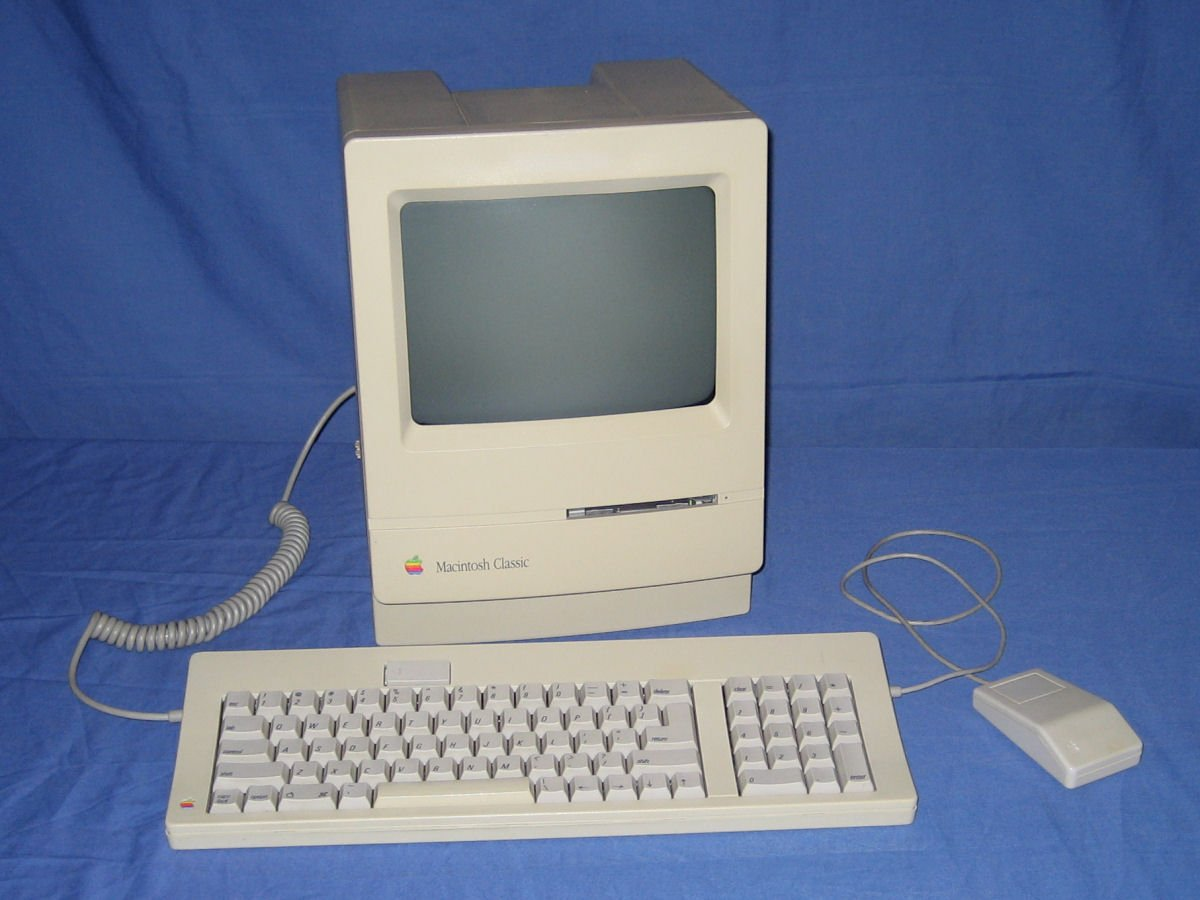
Dieser Macintosh Classic hat 1 MB RAM, ein internes 1,44-MB-SuperDrive und keine interne Festplatte. Apples Unterlagen von 1990 belegen diese Basis. Komponenten anderer Varianten werden nicht addiert: RAM und Laufwerke entsprechen dieser Konfiguration. Das Kompaktformat besitzt einen 9-Zoll-Monochrom-CRT mit 512 × 342 Pixeln, keinen Farbbildschirm.
Technische Daten
| Familiendatum | 1990-10-15 |
|---|---|
| CPU | 68000 · 7.8336 MHz |
| Externer Datenbus | 16 bit |
| Installiertes RAM | 1 MB |
| Maximales RAM | 4 MB |
| ROM | 512 KB |
| Diskettenlaufwerk | 1 × 1.44 MB |
| Interne Festplatte | Keine |
| Erweiterung | Kein Kartensteckplatz |
| ADB | 1 |
| Externes SCSI | DB-25 |
| Bildschirm | 9" · 512 × 342 · 1 bit |
Geschichte und Dokumentation
Dieser Macintosh Classic hat 1 MB RAM, ein internes 1,44-MB-SuperDrive und keine interne Festplatte. Apples Unterlagen von 1990 belegen diese Basis. Komponenten anderer Varianten werden nicht addiert: RAM und Laufwerke entsprechen dieser Konfiguration. Das Kompaktformat besitzt einen 9-Zoll-Monochrom-CRT mit 512 × 342 Pixeln, keinen Farbbildschirm.
Design und Spezifikationen
Der Motorola 68000 arbeitet mit 7,8336 MHz, gerundet 8 MHz. ROM: 512 KB. Auf der Hauptplatine ist 1 MB RAM verlötet. Mehr Speicher erfordert die eigene Classic-Speicherkarte mit weiterem 1 MB und zwei 30-poligen SIMM-Sockeln. Die dokumentierte Grenze liegt bei 4 MB; die beiden Sockel sitzen nicht direkt auf der Hauptplatine.
Nutzung und Kontext
Ein ADB-Port verbindet Tastatur und Maus in einer Kette. Zwei serielle Mini-DIN8 dienen Drucker, Modem oder LocalTalk; externes SCSI nutzt DB-25, externe Diskettenlaufwerke DB-19. AppleTalk bedeutet kein eingebautes Ethernet. Audio nutzt 8 Bit bei etwa 22 kHz. Eine Kopfhörerbuchse belegt kein Stereo: die Serviceunterlagen nennen Monoausgabe.
Der Preis gehörte zum Entwurf
Apples Developer Note von 1990 stellte den Classic als kostengünstigeren Kompaktrechner mit Macintosh-SE-Leistung vor. Zur Kostensenkung und einfacheren Fertigung nannte sie eine kleinere Hauptplatine durch Oberflächenmontage, das erste fest verlötete Megabyte RAM und den Wegfall des SE-Erweiterungsanschlusses. Er war kein bloß umbenannter SE.
Lawrence J. Magid nannte in der Los Angeles Times vom 18. Oktober 1990 einen US-Listenpreis von 999 Dollar für das Modell mit 1 MB und einem Diskettenlaufwerk samt Tastatur. Davon unterschied er ein Paket für 1.499 Dollar mit 2 MB und interner 40-MB-Festplatte. Letzteres ist nicht die festplattenlose Konfiguration dieser Seite. Magid begrüßte die niedrigeren Preise, hielt Macs aber weiterhin für teurer als viele IBM-Kompatible.
www.macdat.net · www.latimes.com
Hinweise und Bild
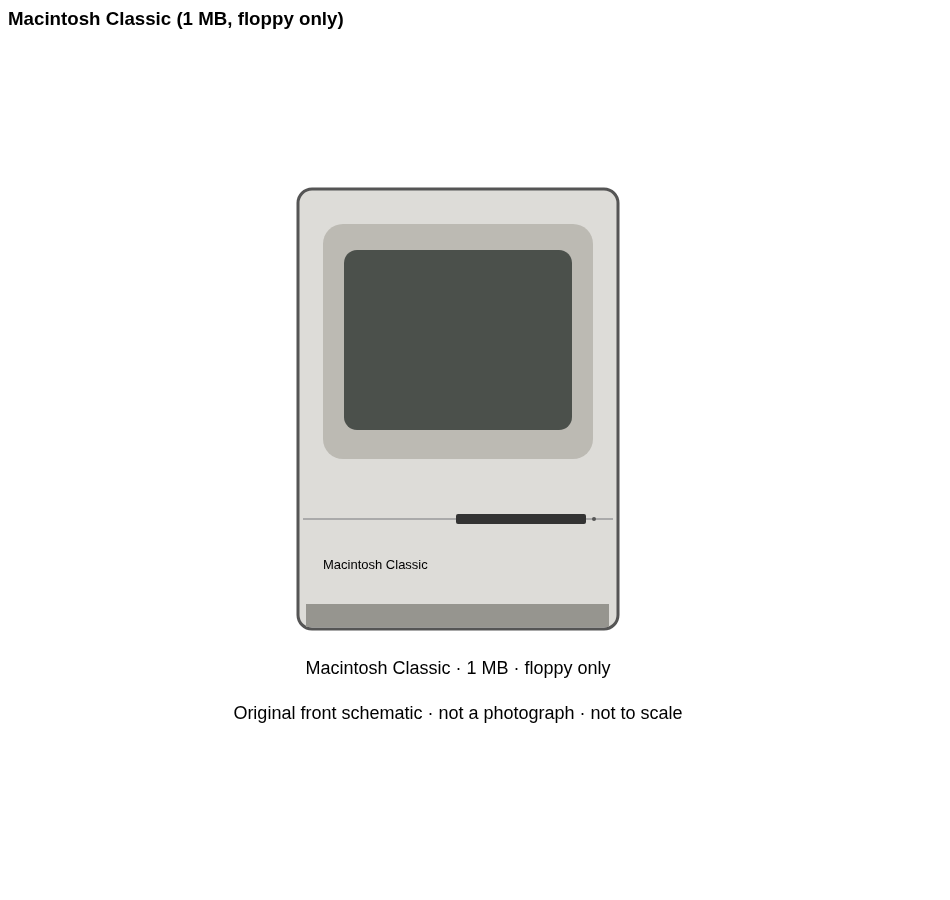
Das Gehäuse ist 33,6 cm hoch, 24,6 cm breit und 28,5 cm tief. Apples Archiv datiert die Familie auf 15. Oktober 1990 und nennt System 6.0.7 als Originalsystem. Der Prospekt 1990 enthält Tastatur und Maus beim Classic; die australische Liste 1992 enthält Tastatur und Bildschirm für beide Familien. Dieses Paket gilt nicht pauschal für jeden Markt; ein späteres Angebot ist kein Startdatum. Das Bild ist ein eigenes Frontschema ohne Maßstab, kein Foto.
Quellen
- Apple · Macintosh Classic
- Apple Australia · Winter 1992
- Apple · Service Source
- Apple · Macintosh Family 1990
- Apple · Tech Info Library 6172
- dimensioncupertino.com · Original schematic illustration
- macintosh-se-1987
- macintosh-se-1987 ⇄ Macintosh Classic (1 MB, floppy only)
Aktualisierung: 29. Oktober 2026· Dieses Produkt vergleichen
Historische Katalogverweise
Bereits im Katalog erfasste Beziehungen, keine vollständige Nachfolge. Varianten desselben Jahres werden als verwandt gezeigt. Ein fehlender Link beweist nicht, dass es kein früheres oder späteres Modell gibt.