
iPad mini 3 (2014)
A1600 · Wi-Fi + Cellular
This entry describes iPad mini 3, model A1600, from 2014, in the Wi-Fi + Cellular configuration. Its documented initial capacities are 16 / 64 / 128 GB.
Specs
| Key feature | A1600 |
|---|---|
| Chip | Apple A7 + M7 |
| Launch storage | 16 / 64 / 128 GB |
| Display | 7.9″ · Multi-Touch Retina |
| Resolution | 2048 × 1536 |
| Density | 326 ppi |
| Wi-Fi | 802.11a/b/g/n |
| Bluetooth | 4.0 |
| Cellular radio | LTE 1/2/3/4/5/7/8/13/17/18/19/20/25/26; UMTS/HSPA/DC-HSDPA; CDMA EV-DO Rev. A/B; GSM/EDGE |
| Connector | Lightning |
| Dimensions | 200 × 134.7 × 7.5 mm |
| Weight | 341 g |
| Battery | 23.8 Wh |
Announcement and storage
This entry describes iPad mini 3, model A1600, from 2014, in the Wi-Fi + Cellular configuration. Its documented initial capacities are 16 / 64 / 128 GB.
Display and design
It uses Apple A7 + M7 and a 7.9-inch Multi-Touch display with 2048 × 1536 pixels at 326 ppi. It measures 200 × 134.7 × 7.5 mm and weighs 341 g. Apple calls it a Retina display. It includes Touch ID in the Home button.
Connections and battery
The rear iSight camera has 5 MP, f/2.4 and 1080p video. The front FaceTime HD camera has 1.2 MP and 720p video. It has Lightning, a 3.5 mm headphone jack, dual microphones and speakers. The built-in battery is rated at 23.8 Wh; Apple quotes up to 10 hours of Wi-Fi use, depending on conditions.
Radio and SIM
The consulted technical sheet documents 802.11a/b/g/n Wi-Fi and Bluetooth 4.0. Cellular radio for A1600: LTE 1/2/3/4/5/7/8/13/17/18/19/20/25/26; UMTS/HSPA/DC-HSDPA; CDMA EV-DO Rev. A/B; GSM/EDGE. The cellular model uses a nano-SIM. The international table and the China page describe LTE differently; this does not establish local activation. Historical frequencies do not guarantee service from a current carrier.
Sources

Identification, optics and battery-test conditions
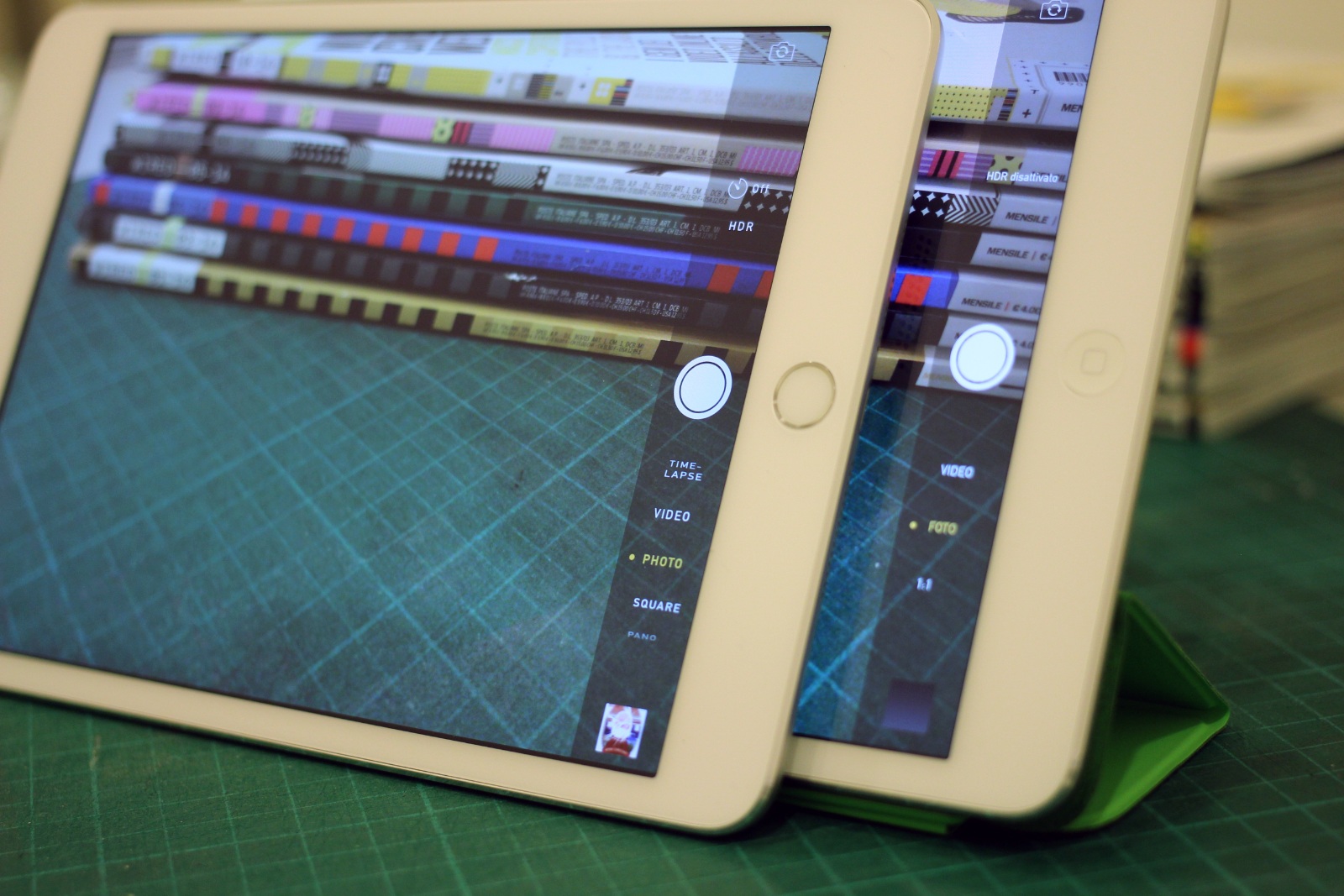
Apple identifies A1600 as the late-2014 iPad mini 3 Wi-Fi + Cellular and A1599 as the model without cellular radio. The nano-SIM tray is on the left and Touch ID is in the Home button. The photograph retains its caveat: the foreground mini 3 and background mini 2 cannot establish A1600, region or capacity.
The screen uses LED backlighting, IPS and a fingerprint-resistant oleophobic coating. The 64-bit A7 works with the M7 motion coprocessor. These are different roles, not two equivalent main processors or a universal speed guarantee.
The rear iSight combines a five-element lens, hybrid IR filter, backside illumination and f/2.4 aperture. The front FaceTime HD also uses backside illumination but records 720p rather than the rear camera’s 1080p. Five rear lens elements should not be assigned to the front camera.
Wi-Fi uses 2.4 and 5 GHz with MIMO, alongside Bluetooth 4.0. Cellular location adds assisted GPS and GLONASS to Wi-Fi, compass and cellular positioning. This configuration list does not turn a front view into proof of satellite hardware.
Apple distinguishes up to nine hours of cellular browsing from ten hours for Wi-Fi, video or music. Both relate to the 23.8 Wh battery and specific testing, not a guaranteed minimum or the remaining capacity of an aged battery.
The test note dates to October 2014 with preproduction mini 3 units: a repeated 2-hour 23-minute film, 358 songs and snapshots of 20 web pages with hourly mail. Brightness was 50%, Auto-Brightness and Ask to Join Networks were off, and WPA2 encryption was enabled. These are Apple’s published conditions, not an independent test of a used A1600.