
iMac (2023)
24-inch, M3
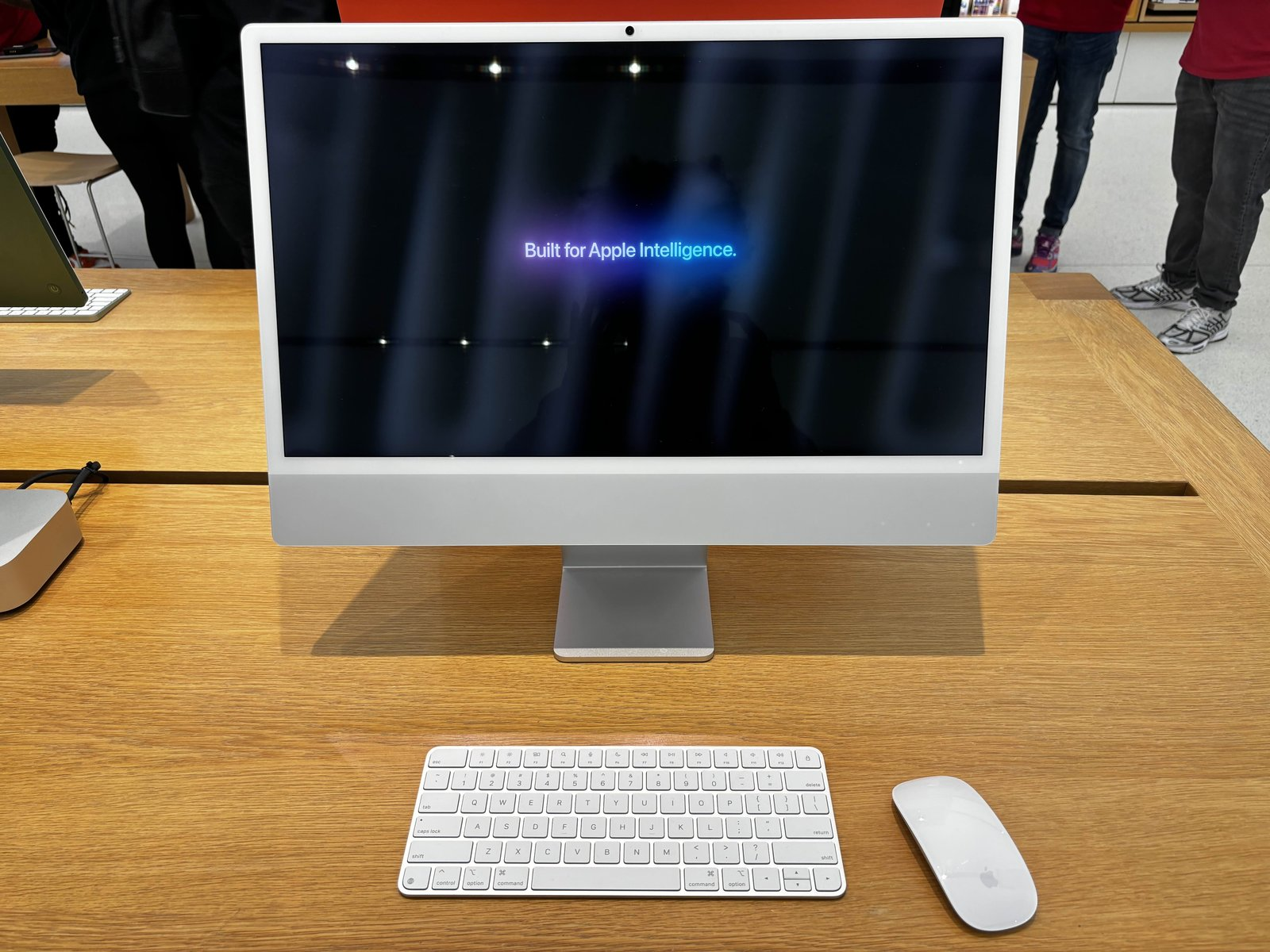
Apple announced the 24-inch iMac with M3 on October 30, 2023. Orders opened that day, with customer arrivals and store availability announced from November 7. M3 combined an eight-core CPU, an eight- or ten-core GPU, a 16-core Neural Engine and 100 GB/s memory bandwidth. The bases included 8 GB unified memory and a 256 GB SSD; the four-port variant also had a 512 GB base.

Specs
| Processor | Apple M3 · 8-core CPU |
|---|---|
| Memory | 8 GB unified |
| Storage | SSD 256 / 512 GB |
| Display | 24″ (23.5″ actual) Retina 4.5K · 4480 × 2520 · P3 · 500 nits · True Tone |
| Graphics | 8 / 10-core GPU |
| Availability | 2023-10-30 (announcement and orders) |
| Price | From 1299 / 1499 USD (US, 8 / 10-core GPU) |
Announcement and configurations
Apple announced the 24-inch iMac with M3 on October 30, 2023. Orders opened that day, with customer arrivals and store availability announced from November 7. M3 combined an eight-core CPU, an eight- or ten-core GPU, a 16-core Neural Engine and 100 GB/s memory bandwidth. The bases included 8 GB unified memory and a 256 GB SSD; the four-port variant also had a 512 GB base.
Display and connections
The display sold as 24 inches had an actual 23.5-inch diagonal, 4480 × 2520 resolution, 500 nits, P3 and True Tone. It included a 1080p FaceTime HD camera, six speakers, three microphones, Wi-Fi 6E and Bluetooth 5.3. Both variants had two Thunderbolt/USB 4 ports; the higher one added two USB 3 ports, Gigabit Ethernet and a Touch ID keyboard as standard. Ethernet and Touch ID were optional on the two-port base.
Options and recreation
The eight-core GPU version started at $1299 in the US in blue, green, pink and silver; the ten-core GPU version started at $1499 and added yellow, orange and purple. Both offered 16 or 24 GB memory options; SSD capacity reached 1 TB with two ports and 2 TB with four. The announced initial system was macOS Sonoma, not Sequoia on today's page. The image is an illustrated exterior recreation, not a photograph or proof of ports or chip.
Sources
External output, ports and physical equipment
Both versions retain full resolution on the built-in display while supporting one external display up to 6K at 60 Hz. DisplayPort output is native over USB-C; VGA, HDMI, DVI and Thunderbolt 2 need separately sold adapters, not built-in video sockets. The two Thunderbolt/USB 4 ports reach up to 40 Gb/s in Thunderbolt 3 or USB 4 and 10 Gb/s in USB 3.1 Gen 2. On the four-port model, the extra two USB 3 ports reach 10 Gb/s; they are not two more Thunderbolt ports.
Including the stand, height is 46.1 cm and width 54.7 cm; the stand is 14.7 cm deep and 13 cm wide. This depth is for the stand, not panel thickness. Apple distinguishes 4.43 kg for two ports and 4.48 kg for four, varying by configuration and manufacture. Both specifications give 10–35 °C operating temperature and 5–90% noncondensing humidity.
Both boxes include Magic Mouse, a 143 W adapter, a two-meter power cord and USB-C to Lightning cable. Adapter power is not a continuous power-consumption measurement. The standard keyboard is Magic Keyboard for two ports and Magic Keyboard with Touch ID for four. Both versions have a 3.5 mm headphone jack supporting high-impedance headphones.