
iMac (2010)
21.5-inch, 3.06 GHz, Core i3, Mid
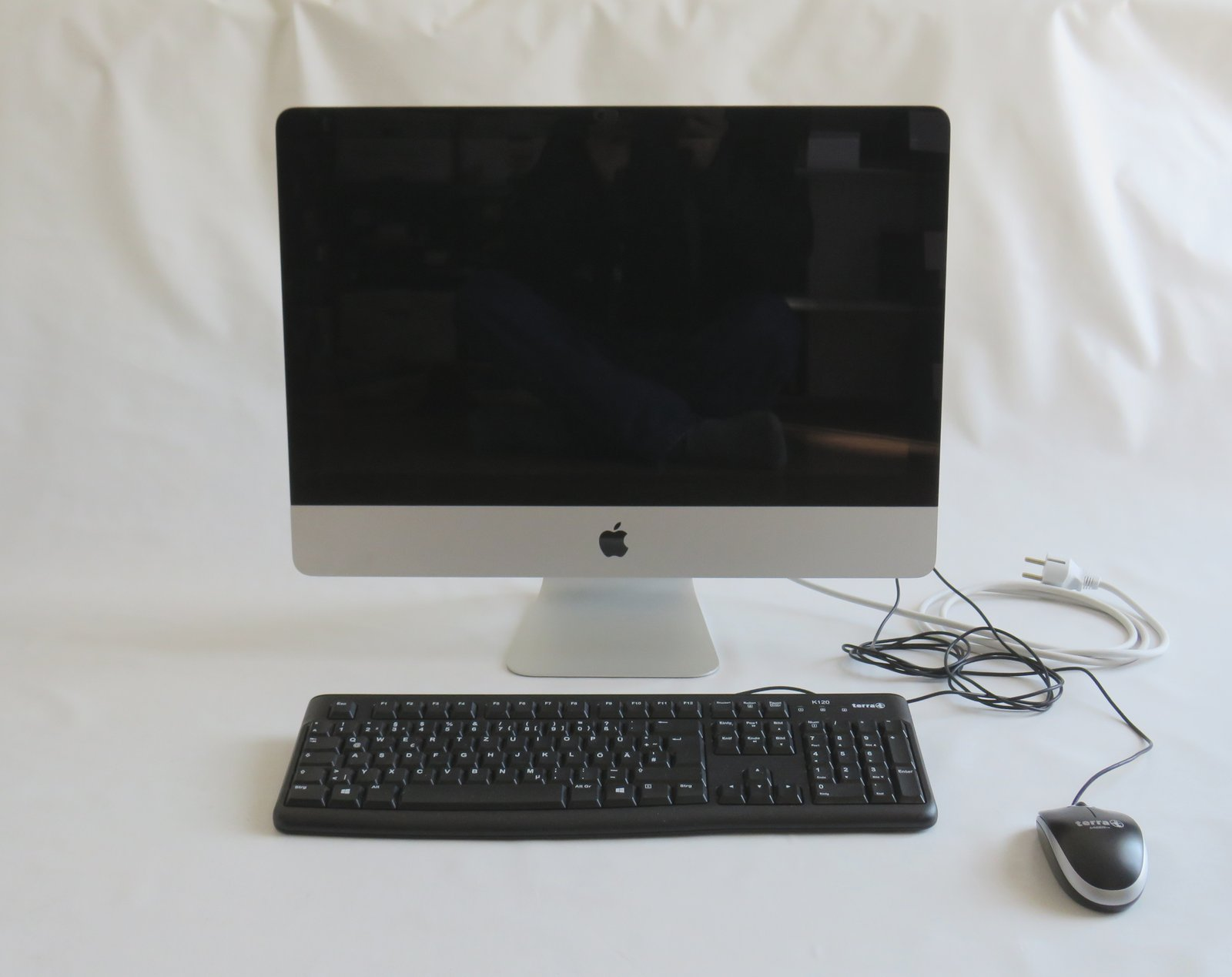
Apple announced this 21.5-inch iMac on July 27, 2010 at 1199 USD in the United States. Apple stated that the new line was now shipping. The aluminum and glass design has an IPS display with LED backlighting and a 16:9 aspect ratio. This entry describes one specific configuration, not all simultaneous versions.
Specs
| Announcement | 2010-07-27 |
|---|---|
| CPU | Intel Core i3 (2-core) · 3.06 GHz |
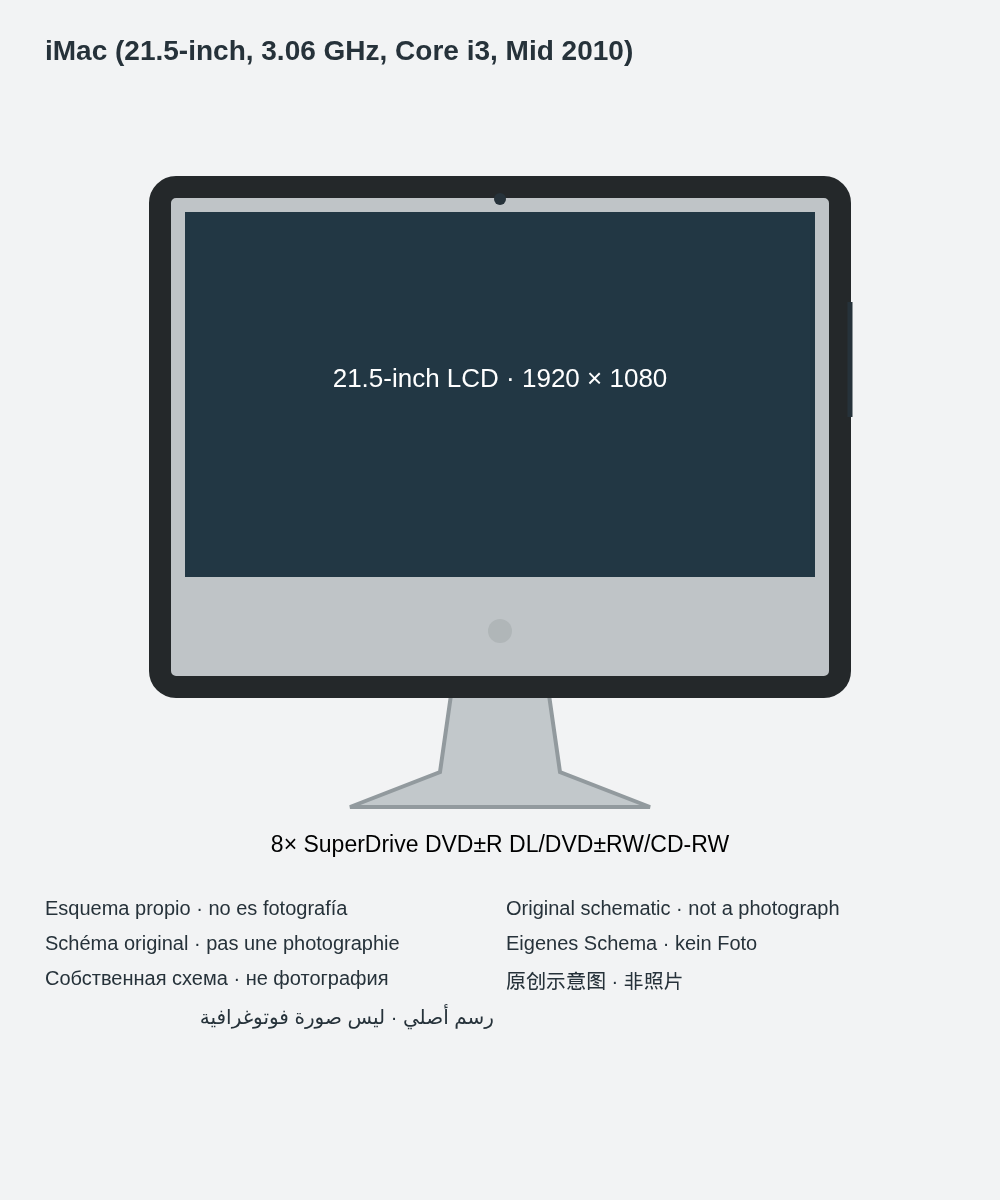
| Display | 21.5″ IPS LED · 1920 × 1080 |
| Standard and maximum RAM | 4 GB · DDR3 1333 MHz · 16 GB |
| Disk | 500 GB Serial ATA · 7200 rpm |
| Graphics | ATI Radeon HD 4670 · 256 MB GDDR3 |
| Optical drive | 8× SuperDrive DVD±R DL/DVD±RW/CD-RW |
| Ports | Mini DisplayPort · FireWire 800 · 4 USB 2.0 · SDXC |
| Wired network | Gigabit Ethernet 10/100/1000 |
| Wireless | AirPort Extreme 802.11n · Bluetooth 2.1+EDR |
| System and apps | Mac OS X 10.6 Snow Leopard · iLife |
| Announced price | 1199 USD |
History and documentation
Apple announced this 21.5-inch iMac on July 27, 2010 at 1199 USD in the United States. Apple stated that the new line was now shipping. The aluminum and glass design has an IPS display with LED backlighting and a 16:9 aspect ratio. This entry describes one specific configuration, not all simultaneous versions.
Design and specifications
The standard configuration has a 3.06 GHz Intel Core i3 (2-core), 4 GB of 1333 MHz DDR3 SDRAM and a 500 GB Serial ATA disk at 7200 rpm. Graphics are ATI Radeon HD 4670 · 256 MB GDDR3. Includes an 8× SuperDrive with double-layer support. Official memory expansion reaches 16 GB through four SO-DIMM slots; order options are not presented as standard equipment.
Use and context
Includes iSight, AirPort Extreme 802.11n, Bluetooth 2.1+EDR, Gigabit Ethernet, speakers and microphone. It has four USB 2.0 ports, one FireWire 800 and an SDXC slot. Mini DisplayPort provides video output with adapters sold separately. Video input is not claimed for this 21.5-inch version. Apple Wireless Keyboard and Magic Mouse are standard.
Notes and image
Includes Mac OS X 10.6 Snow Leopard and iLife with iPhoto, iMovie, GarageBand and iWeb. Snow Leopard includes Time Machine, Quick Look and Spaces. Magic Trackpad is optional, not standard. The US launch price is not a current or Spanish price.
Core i3, panel and 3.06 GHz acoustic figures
The 3.06 GHz Core i3 has 4 MB L3 cache and supports Hyper-Threading. Apple’s specification assigns Turbo Boost to the 3.6 GHz Core i5, not this i3. The 4 GB of 1333 MHz DDR3 consists of two 2 GB SO-DIMMs; four slots support up to 16 GB. This version has Radeon HD 4670 graphics with 256 MB GDDR3 and a 500 GB 7200-rpm drive. The 3.2 GHz list’s 512 MB HD 5670 and 1 TB drive are not transferred to it. Apple · iMac 21.5 Mid 2010 · Processor and memory
The 1920 × 1080 IPS panel has typical brightness of 330 cd/m² and typical viewing angles of 178° horizontally and vertically, not guaranteed minima for a used display. It supports native resolution simultaneously with one external display up to 2560 × 1600, with extended desktop and mirroring. DVI, VGA and dual-link DVI need separately sold Mini DisplayPort adapters. The headphone jack also provides optical digital output, and line input supports optical digital input. FireWire 800 supplies 7 W. Apple · iMac 21.5 Mid 2010 · Display and audio
Height is 45.1 cm, width 52.8 cm and depth 18.85 cm; weight is 9.3 kg, varying with configuration and manufacturing. In the 3.06 GHz acoustic column, Apple declares operator-position sound pressure of 18 dB at idle and 19 dB during hard-drive access. No CD-access value is published for this column; the 3.2 GHz model’s 22 dB is not used. These are pressure figures, not sound power in bels or a guarantee for every workload or used computer. Apple · iMac 21.5 Mid 2010 · Size and acoustics
Sources
- Apple · 2010-07-27
- Apple · 2010
- dimensionapple.com · Original schematic illustration
- iMac (21.5-inch, 3.06 GHz, GeForce, Late 2009)
- iMac (21.5-inch, 3.06 GHz, GeForce, Late 2009) ⇄ iMac (21.5-inch, 3.06 GHz, Core i3, Mid 2010)
More products
Historical catalogue links
Relationships already recorded in the catalogue, not a complete succession chain. Same-year variants are shown as related. A missing link does not prove that an earlier or later model does not exist.