
EarPods (2012)
3.5 mm
Apple introduced EarPods in September 2012 and included them with iPhone 5 and the new iPod touch and nano announced on September 12. This entry covers the 3.5 mm version, separate from later Lightning and USB-C variants.
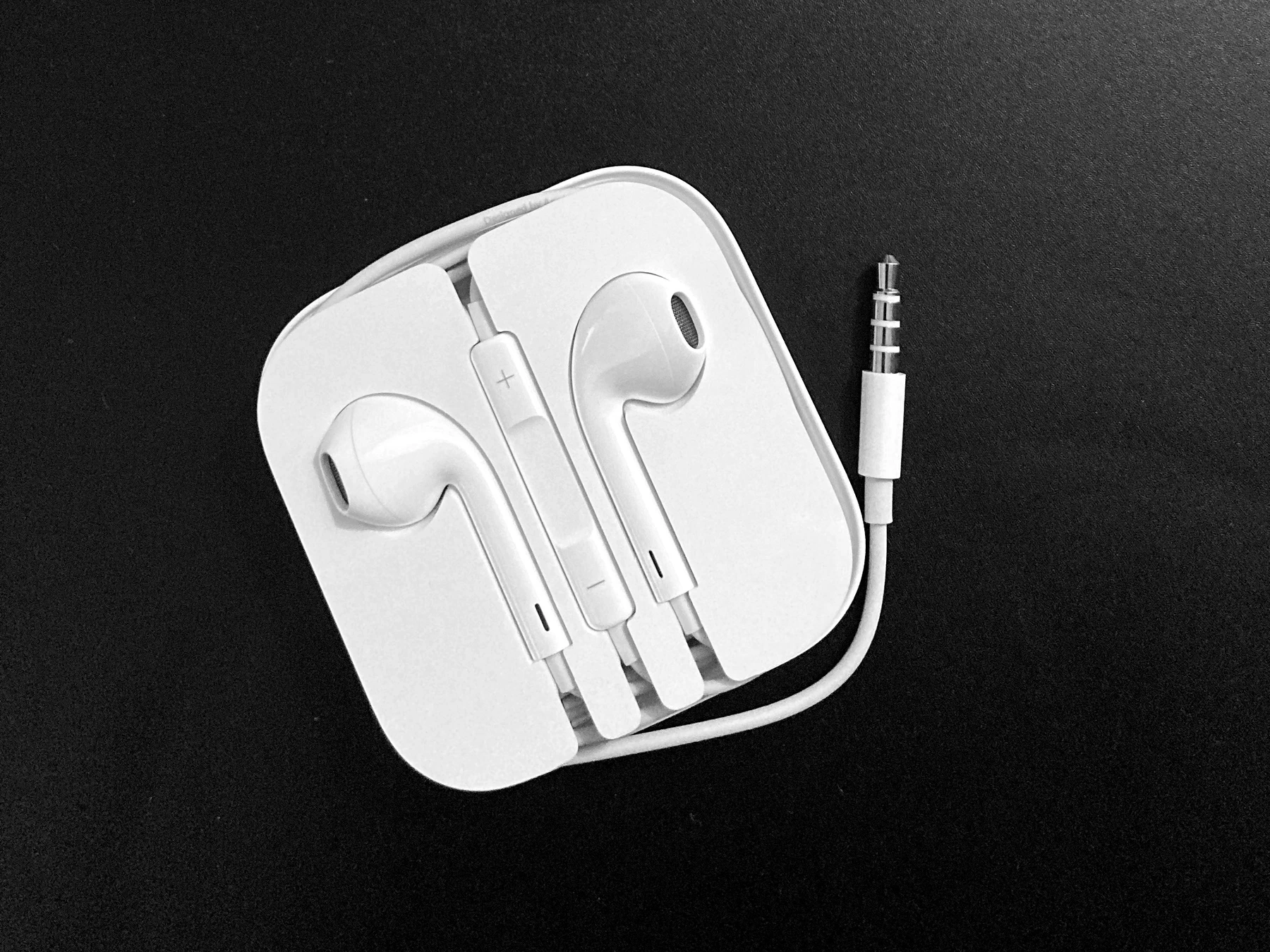
Specs
| Connectivity | 3.5 mm headphone plug |
|---|---|
| Controls | Volume, playback and calls (remote-equipped version) |
| Availability | Announced September 2012 |
Launch
Apple introduced EarPods in September 2012 and included them with iPhone 5 and the new iPod touch and nano announced on September 12. This entry covers the 3.5 mm version, separate from later Lightning and USB-C variants.
Design and use
The design departed from traditional circular earbuds. The remote-equipped version controls volume, playback and calls. Apple distinguishes audio compatibility from remote and microphone support: not all models support volume up and down.
Context and photograph
The photograph shows 3.5 mm EarPods supplied with an iPhone 6 in their open case; it is not a photograph of the 2012 launch packaging. This entry does not transfer features or requirements from Lightning and USB-C variants.
Three connectors, three compatibility paths
3.5 mm: connects directly to a standard 3.5 mm headphone jack. Lightning: requires an iPhone, iPad or iPod touch with Lightning and iOS 10 or later; Apple excludes iPod nano and devices running iOS 9 or earlier. USB-C: requires a device with USB-C; Apple specifies macOS 12.6+, iPadOS 16.4+ or iOS 17+ for Mac, iPad and iPhone, respectively. Apple Support · Apple USB-C
A different connector does not by itself demonstrate better sound. This comparison separates connections and requirements; it does not present the three versions as interchangeable without an adapter. Apple documents adapters from Lightning or USB-C to 3.5 mm headphones, not universal compatibility between all connectors. Apple Support
More products
Historical catalogue links
Relationships already recorded in the catalogue, not a complete succession chain. Same-year variants are shown as related. A missing link does not prove that an earlier or later model does not exist.